Functional Architecture
Seven functions, filled by the ecosystem.
PRAXIS is organized around seven functional needs that any community practicing democratic self-governance will encounter. Each function is filled by existing open-source tools, not custom software. What is shared across the network is the practice, not the product. No single tool is a dependency.
Map your community's functional needs to specific tools. Every tool listed is open-source and deployable today.
1. Governance: Making Real Decisions Together
The democratic core. Participatory budgeting, citizen assemblies, formal proposals, structured debate, and voting. The presence of real decisions and real outcomes is what distinguishes PRAXIS from every civic engagement initiative that preceded it.
GUIDE: THE ASSEMBLY HOW-TO
Write a practical, step-by-step guide for running your first assembly: from the initial organizing meeting of 5 people through a functioning assembly of 50.
Three phases. Phase 1 (5 people): choose a meeting space, set a date, write a one-page founding statement, assign roles (facilitator, notetaker, outreach). Phase 2 (5-20 people): run three consecutive meetings with a published agenda, establish decision-making rules (consensus or vote, quorum threshold), launch one working group. Phase 3 (20-50 people): formalize committee structure, run a participatory budgeting exercise with real money (even $500), produce your first public-facing decision. Include: a sample agenda template, a facilitation cheat sheet, and the three mistakes every new assembly makes (and how to avoid them).
2. Engagement: The Civic Engine
The one thing PRAXIS builds from scratch. The Comrade Agent tracks your activities, assigns tasks based on the network, and generates your Revolutionary Calendar. Twelve civic roles provide identity within the movement before a participant has completed any traditional organizing work.
PLAN: PHYSICAL EVENTS CALENDAR
Design your assembly's recurring physical events calendar: what happens weekly, monthly, and quarterly, who organizes each event, and how the Comrade Agent integrates them into participants' Revolutionary Calendars.
Three tiers. Weekly: working group meetings (staggered across the week), community office hours (open to public), mutual aid distribution. Monthly: full general assembly, community potluck or social event, skill-share workshop. Quarterly: public town hall (invite non-members), network-wide day of action, retrospective and planning session. For each event type: format, duration, venue requirements, minimum attendance for viability, who is responsible for logistics. The Comrade Agent should surface these events to participants based on their class and working group membership.
3. Visibility: Data and Decision Support
Tools that make democratic governance accessible to first-time participants: budget visualization, participation analytics, outcome tracking, and geographic mapping of community needs and power structures.
GUIDE: HORIZONTAL PROJECT MANAGEMENT
Write a guide to managing projects without hierarchy: how decisions get made, how work gets distributed, how accountability works, and which tools to use when nobody is the boss.
Four sections. (1) Decision flow: who can start a project (anyone), how it gets resourced (proposal to working group or assembly), how scope changes are approved (consent-based, not top-down). (2) Work distribution: task boards visible to all (Kanban on a wiki, shared spreadsheet, or Taiga), voluntary sign-up with the Comrade Agent suggesting tasks to fill gaps, rotating roles for recurring work. (3) Accountability: weekly check-ins (async via forum post), blockers raised publicly, no blame culture but clear "this didn't get done and here's what we're doing about it." (4) Tools: Taiga or Wekan for Kanban, Nextcloud for documents, Discourse for async discussion. Include a one-page "project kickoff template" any working group can use.
4. Resilience: Communication When Infrastructure Fails
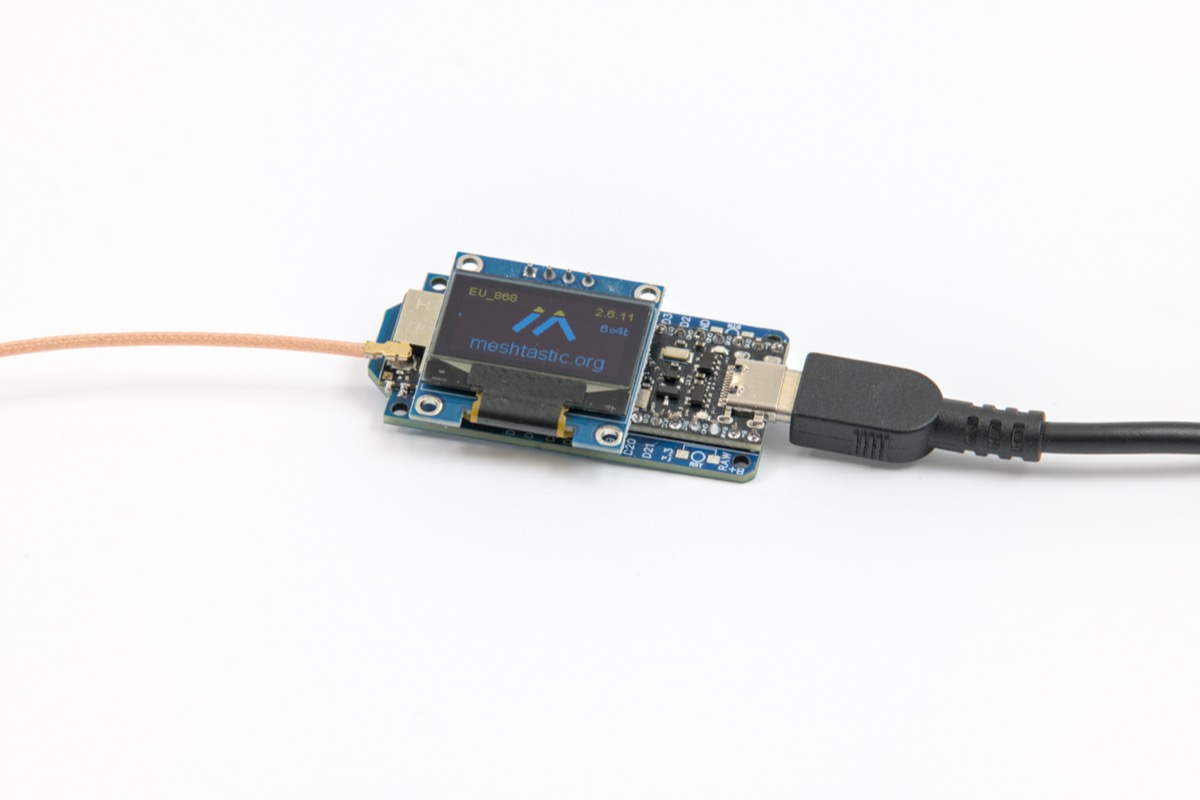
Under normal conditions, assemblies coordinate through standard tools. When internet infrastructure fails, the practice degrades gracefully through tools designed for exactly that scenario.
SOP: CONFLICT MANAGEMENT
Write your assembly's conflict management protocol: how internal disputes are surfaced, mediated, and resolved, and how external conflicts (legal threats, hostile actors, public opposition) are handled.
Two tracks. Internal: (1) Early intervention: any member can raise a concern to a designated mediator, confidentially. (2) Mediation: trained mediator meets with parties separately, then together. Ground rules: no interrupting, no personal attacks, focus on needs not positions. (3) Circle process: if mediation fails, a restorative circle with affected community members. (4) Assembly review: persistent or structural conflicts go to the full assembly for a binding decision. External: (1) Legal threats: who to call (legal aid contact, NLG chapter), what to document, who speaks publicly. (2) Hostile actors: de-escalation protocol, documentation, when to involve authorities vs. community response. (3) Public opposition: designated spokesperson, message discipline, counter-narrative strategy. Train two mediators before you need them.
MODEL: FINANCIAL SUSTAINABILITY
Design your assembly's financial sustainability model on a DIY budget: revenue streams, cost structure, and the governance process for spending decisions.
Three pillars. (1) Revenue: membership dues on a sliding scale ($0-50/month, pay what you can), Open Collective for transparent crowdfunding, grant applications (target three per year), revenue-generating events (skill-shares, community dinners, cooperative sales), in-kind contributions (donated space, pro-bono services). (2) Costs: keep fixed costs under $200/month (hosting, communication tools, meeting space). Variable: event costs, printing, mutual aid fund. (3) Governance: all spending over $100 requires working group approval, over $500 requires assembly vote, monthly financial report posted publicly. Budget managed via Open Collective so every transaction is visible. Goal: financial independence within 12 months. No single funding source should exceed 30% of total revenue.
5. Economics: Cooperative Infrastructure
How governance decisions translate into economic alternatives that participants can live inside, not merely vote on. Connecting economic decisions to the governance process so they flow from democratic deliberation.
GUIDE: STARTING A NON-PROFIT
Write a practical guide to incorporating your assembly as a non-profit: entity type selection, filing process, governance requirements, and the tradeoffs of formalization.
Five sections. (1) Entity types: 501(c)(3) for tax-deductible donations (limits political activity), 501(c)(4) for civic engagement (allows lobbying, no tax deduction), fiscal sponsorship (use an existing non-profit as your legal umbrella, fastest path). Recommend fiscal sponsorship for Year 1, independent filing for Year 2+. (2) Filing: state incorporation (articles of incorporation template), EIN application, IRS Form 1023-EZ for small orgs under $50K revenue. (3) Governance: board of directors (minimum 3, drawn from assembly), bylaws template, annual meeting requirements. (4) Compliance: annual state filing, 990-EZ tax return, public disclosure requirements. (5) Tradeoffs: formalization enables grants and bank accounts but creates legal obligations and potential co-optation. The assembly remains sovereign; the non-profit is a legal tool, not the movement. Include a decision tree: "Should we incorporate now or use fiscal sponsorship?"
GUIDE: WORKER COOPERATIVES
Write a practical guide to starting a worker cooperative connected to your assembly: legal structure, governance, capitalization, and how surplus flows back to the community.
Four sections. (1) Structure: articles of incorporation as a cooperative corporation (varies by state), operating agreement template, member buy-in structure (keep it low: $100-500, with payment plans). (2) Governance: one member one vote, elected board from worker-members, annual member meeting, patronage dividend formula. (3) Capitalization: member equity contributions, community loan funds (Cooperative Fund of New England, Shared Capital Cooperative), SBA loans, crowdfunding. Target: enough runway for 6 months of operations. (4) Assembly integration: cooperative reports quarterly to the assembly, surplus allocation voted on by members with a percentage (10-20%) flowing to the assembly's mutual aid fund. Include three cooperative types that work well at small scale: food co-op, cleaning cooperative, tech services cooperative. Link to the Democracy at Work Institute and the U.S. Federation of Worker Cooperatives for templates.
6. Federation: Connecting Autonomous Cities
Bookchin's confederalism, implemented as a coordination practice: autonomous assemblies in different cities sharing proposals, outcomes, and methodology without any center having authority over the others. Federation is a practice first and a protocol second. In the near term: shared documentation, regular coordination calls, and a common Assembly Playbook. As the network grows, the Civic Engine connects across cities so that earned standing carries across the federation.
GUIDE: HOW TO FEDERATE
Write a practical guide to connecting your assembly with another city's assembly: first contact, shared protocols, what to coordinate and what to leave autonomous.
Five steps. (1) Find each other: reach out to assemblies in nearby cities through the PRAXIS network, mutual aid networks, DSA chapters, or cooperative alliances. (2) First contact: a joint video call between 3-5 representatives from each assembly. Share your founding documents, governance model, and current priorities. (3) Shared protocols: agree on a communication channel (shared Matrix space), meeting cadence (monthly inter-assembly call), and a shared document format for proposals and outcomes. (4) What to coordinate: methodology sharing (what facilitation techniques work), mutual support (send experienced facilitators to help new assemblies), joint campaigns when interests align, shared training resources. (5) What stays autonomous: governance decisions, membership, budgets, local priorities, tool selection. No assembly has authority over another. The federation is a practice of mutual aid between assemblies, not a hierarchy. Include a one-page "federation agreement" template both assemblies sign.
7. Media: Movement-Owned, Algorithm-Free
The Fediverse provides decentralized video hosting, image sharing, blogging, music distribution, and discussion, all interconnected through open protocols, all free from corporate algorithms.
GUIDE: SOCIAL MEDIA WITHOUT FEEDING THE BEAST
Write a social media strategy that uses corporate platforms for reach without depending on them: how to post, what to post, where to redirect, and how to build an audience you own.
Four principles. (1) Post there, live here: use Instagram, TikTok, Twitter/X, and Facebook for discovery, but every post should drive people to your owned infrastructure (Ghost newsletter, Matrix space, Discourse forum). Never make a corporate platform your primary home. (2) Content that survives the algorithm: short-form video (<60s) of real assembly moments, not polished propaganda. Behind-the-scenes of mutual aid. Before/after of community projects. The algorithm rewards authenticity and conflict; give it authenticity. (3) Cross-post everything: same content to all platforms simultaneously using Buffer or similar. Spend 30 minutes/week scheduling, not hours/day posting. (4) Build the exit ramp: every bio links to your Ghost site. Every post ends with "join us" + your owned signup link. Track: how many followers on corporate platforms vs. how many on your email list. When the list exceeds 500, you can survive being deplatformed. Include a weekly content calendar template and the one metric that matters: newsletter signups per week.
PLAN: DEPLOYMENT
Draft your 90-day tool deployment plan: which tools launch in week 1, week 4, and week 12, with named owners for each.
Three-column table. Column 1: Tool name and function. Column 2: Owner (the person who installs, configures, and trains others). Column 3: Launch date and "ready" criteria (what must be true before the community starts using it). Week 1: communication (Matrix or Signal). Week 4: governance (Decidim or Loomio). Week 12: visibility (dashboards, maps). Sequence by dependency, not ambition.
ASSESS: REDUNDANCY MATRIX
Build a redundancy matrix: for each critical function, name the primary tool, the backup tool, the migration trigger, and the migration procedure.
Table with five columns. Function (governance, communication, data, mesh). Primary tool. Backup tool. Trigger (what failure condition causes the switch: downtime threshold, security breach, maintainer abandonment). Procedure (who initiates migration, where data exports go, communication plan to members, estimated switchover time). No function should have zero backups.
BUILD: ARCHITECTURAL DECISION RECORD
Write three Architectural Decision Records (ADRs) for your deployment: one for governance tooling, one for communication, one for data sovereignty.
ADR format per record: Title, Status (proposed/accepted/deprecated), Context (what problem you're solving), Decision (what you chose and why), Consequences (tradeoffs accepted). Example: "ADR-001: Decidim for participatory budgeting. Context: need structured proposal and voting. Decision: Decidim over Consul because our team has Ruby experience. Consequence: higher hosting requirements, but stronger PB workflow."
TOOL: GOVERNANCE PLATFORM SELECTION
Evaluate Decidim, Loomio, and Consul for your assembly's governance needs: feature comparison, hosting requirements, and community fit.
Three-column comparison. For each platform: decision-making features (proposals, voting, budgeting), hosting model (self-hosted vs. SaaS), technical requirements (Ruby/Rails, PostgreSQL, Docker), community size it serves best, localization support, and active maintenance status. Score each 1-5 on: ease of setup, feature depth, community support, data sovereignty. Recommend one and explain why.
TOOL: COMMUNICATION STACK
Design your communication stack: select and configure the tools for real-time chat, async discussion, video calls, and emergency alerts.
Four layers. Real-time: Matrix/Element vs. Signal vs. Rocket.Chat (compare federation, encryption, self-hosting). Async: Discourse vs. Forem vs. mailing lists (compare threading, moderation, search). Video: Jitsi vs. BigBlueButton (compare capacity, recording, breakout rooms). Emergency: Meshtastic mesh network vs. SMS tree vs. radio (compare range, infrastructure independence, setup time). For each layer, name the primary tool and the offline fallback.
TOOL: DATA SOVEREIGNTY SETUP
Set up your data sovereignty infrastructure: choose hosting, configure backups, define access controls, and write the data governance policy.
Four components. Hosting: VPS provider selection criteria (jurisdiction, payment methods, uptime SLA). Backups: 3-2-1 strategy (3 copies, 2 media types, 1 offsite), automated schedule, tested restoration procedure. Access: role-based permissions matrix (admin, moderator, member, public). Policy: one-page data governance document covering what is collected, who can access it, retention period, deletion process, and breach notification procedure.