Strategic Vision

We are building the system that makes the old system irrelevant.

Not through insurrection. Not through electoral capture. Through the patient construction of functional democratic infrastructure that demonstrably outperforms existing institutions, until the question is no longer whether to change the system, but why the old one is still running at all.

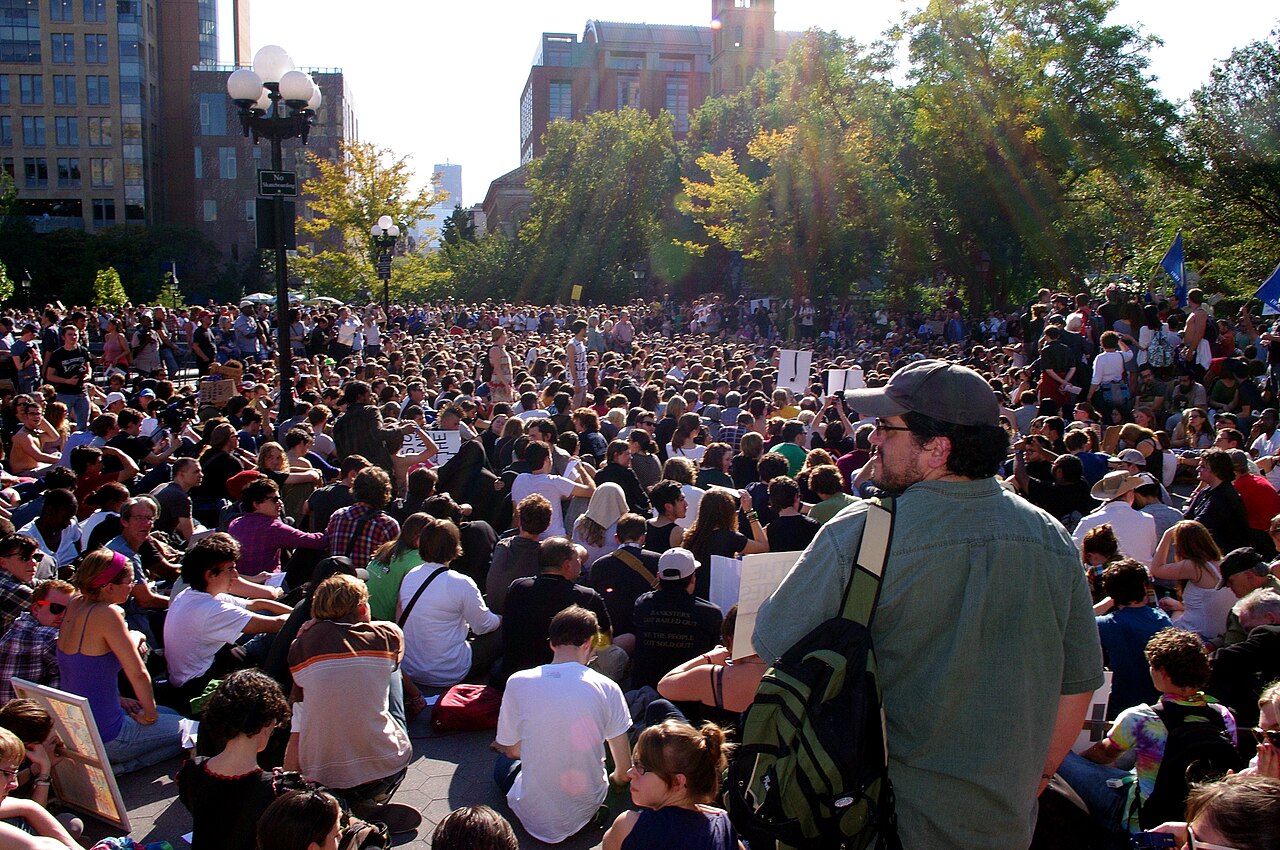
Occupy Wall Street general assembly at Washington Square Park, 2011. Hundreds gathered for direct democratic deliberation.
Occupy Wall Street general assembly, Washington Square Park, October 2011. Direct democracy practiced at scale. Photo: David Shankbone, CC BY 3.0.
Use this section to articulate your community's strategic vision. Keep the framework; fill in local details.
What PRAXIS Is
PRAXIS is a practice, not a product. Participatory Revolutionary Autonomous eXperience and Infrastructure Stack. It is a methodology for composing existing open-source tools into democratic governance infrastructure, a civic engagement engine that makes organizing visible and progressive, and a playbook for running neighborhood assemblies that make real decisions about real resources. PRAXIS builds three things: the Civic Engine, the Assembly Playbook, and the integration glue that connects proven open-source tools into a coherent practice. Everything else is harvested from an ecosystem that already exists. If the network adopts a different name in the course of organizing, the practice is unchanged. PRAXIS is the methodology, not the brand.
Tipping Point Mathematics
Active participation threshold for political irreversibility
3.5%
Approximate US national equivalent
11M
3.5% of any mid-size US city
10-20K
Narrative Architecture: Problem / Alternative / Invitation
P
Problem: stated at the frequency people already receive on
Fuel is expensive. Your vote does not count. The city ignores your neighborhood. This is not ideological language. It is the language of lived experience, the only register in which mass recruitment is possible.
A
Alternative: possible, not utopian
What if your neighborhood actually determined how the city spent its budget? What if your community could communicate even when the internet was disrupted? Each component carries a plain-language value proposition that requires no ideological conversion.
I
Invitation: compelling, not obligatory
There is a game operating in your city in which real decisions are made and real power is exercised. Identity precedes action. The Civic Engine provides identity before the participant has any understanding of dual power theory.
BUILD: INSTITUTIONAL MAP
Map your community's parallel institutions: what you'll build, what each replaces, and why yours outperforms the incumbent.
Produce a two-column table. Left: existing institution (city council budget process, emergency services, local news). Right: your parallel (participatory budgeting assembly, mutual aid rapid response, community media). For each row, name the measurable outcome where yours wins.
BUILD: SUCCESS CRITERIA
Write your assembly's victory conditions: three concrete, measurable thresholds that define "we won."
Format: threshold (e.g., "500 active participants"), evidence (how you'll measure it), and timeline. One condition should be participation-based, one outcome-based, one legitimacy-based (when external institutions begin deferring to your decisions).
ASSESS: STRATEGIC ASSESSMENT
Draft a SWOT analysis for your city: strengths, weaknesses, opportunities, and threats to building parallel infrastructure here.
One page, four quadrants. Strengths: existing networks, allied organizations, local conditions. Weaknesses: capacity gaps, opposition, resource constraints. Opportunities: upcoming elections, crises, institutional failures. Threats: legal, political, burnout. End with one sentence: "We start here because _____."
Metaphysical Infrastructure

The values are the architecture.

Before the tools, before the assemblies, before the federation, there is a question that every political project must answer and that most refuse to ask: what kind of people are we trying to become? PRAXIS is not values-neutral infrastructure. The ethics are load-bearing. They are not decorative language applied after the system is designed. They are the design constraints that determine what the system can and cannot be.

Relational Existence
We exist in relationship, not as isolated individuals
MODEL: RELATIONSHIP MAP
Map your community's existing web of mutual obligation: who depends on whom, and where are the gaps?
Draw a network diagram or list. Nodes: households, organizations, institutions, informal groups. Edges: what flows between them (childcare, food, labor, information, money). Circle the clusters. Mark the disconnected nodes. Those gaps are your first organizing targets.
Reciprocity, Not Transaction
The gift economy as the foundation of democratic life
MODEL: EXCHANGE MODEL
Design your community's reciprocity system: what is exchanged, how contributions are tracked, and what prevents extraction.
Define the unit of exchange (hours, points, credits). List the top ten services your community needs. Specify the tracking mechanism (spreadsheet, app, physical board). Write one rule that prevents accumulation: how do you ensure no one hoards while others lack?
Mutual Aid as Structural Principle
Solidarity, not charity
SOP: MUTUAL AID
Write the standard operating procedure for your mutual aid network: intake, dispatch, fulfillment, and follow-up.
Four sections. Intake: how requests arrive (hotline, form, word of mouth), who triages, response time target. Dispatch: how requests match to volunteers, notification method. Fulfillment: delivery protocol, safety procedures, documentation. Follow-up: feedback loop, quality check, recurring need identification. Name a coordinator for each section.
The Steady State
An economy that serves life instead of consuming it
MODEL: SUFFICIENCY MODEL
Define your community's floor and ceiling: the minimum standard of living your assembly guarantees, and the ecological limits it enforces.
Two lists. Floor (non-negotiable minimums): food security, housing stability, healthcare access, education, political voice, internet access. For each, define "met" in measurable terms. Ceiling (hard limits): energy consumption targets, waste reduction goals, land use constraints. Cite local data where possible.
Kindness as Load-Bearing Structure
Systems designed so that care is the default, not the exception
PLAN: CARE INFRASTRUCTURE
Design the care systems embedded in your assembly: who checks on whom, how burnout is detected, and what support activates automatically.
Three components. Buddy system: every new member paired with a veteran, check-in schedule defined. Burnout protocol: warning signs checklist, mandatory break triggers, role rotation schedule. Crisis support: who to call, what resources deploy, how the assembly absorbs the load when a member is down. Write it as a one-page protocol your facilitators carry.
Restorative Justice
Justice that heals instead of justice that cages
SOP: CONFLICT RESOLUTION PROCESS
Write your assembly's conflict resolution process: from first report through resolution, with named roles at each step.
Five stages. (1) Report: how harm is reported, to whom, confidentiality rules. (2) Assessment: who evaluates severity, timeline for response. (3) Circle: who facilitates, who participates, ground rules. (4) Agreement: format for resolution terms, accountability measures, check-in schedule. (5) Reintegration: conditions for return to full participation. Include an escalation path for when the process fails.
The Synthesis
These values are not aspirations. They are engineering requirements. Every technical decision, every governance process, every facilitation methodology, and every quest in the Civic Engine must be evaluated against them. Does this feature deepen reciprocity or enable extraction? Does this process restore relationships or punish individuals? Does this economic structure serve sufficiency or demand growth? Does this design make kindness easier or harder? If the answer to any of these questions points away from the values, the design is wrong, regardless of its technical elegance. The Zapatistas say todo para todos, nada para nosotros: everything for everyone, nothing for ourselves. That is not a slogan. It is a specification.
Theoretical Foundations

The intellectual lineage of the practice.

PRAXIS is not a novel political theory. It is the practical implementation of ideas that have been tested (in assemblies, in autonomous territories, in revolutionary experiments) across centuries and continents. The methodology directly encodes the structural lessons of these movements: what worked, what failed, and why.

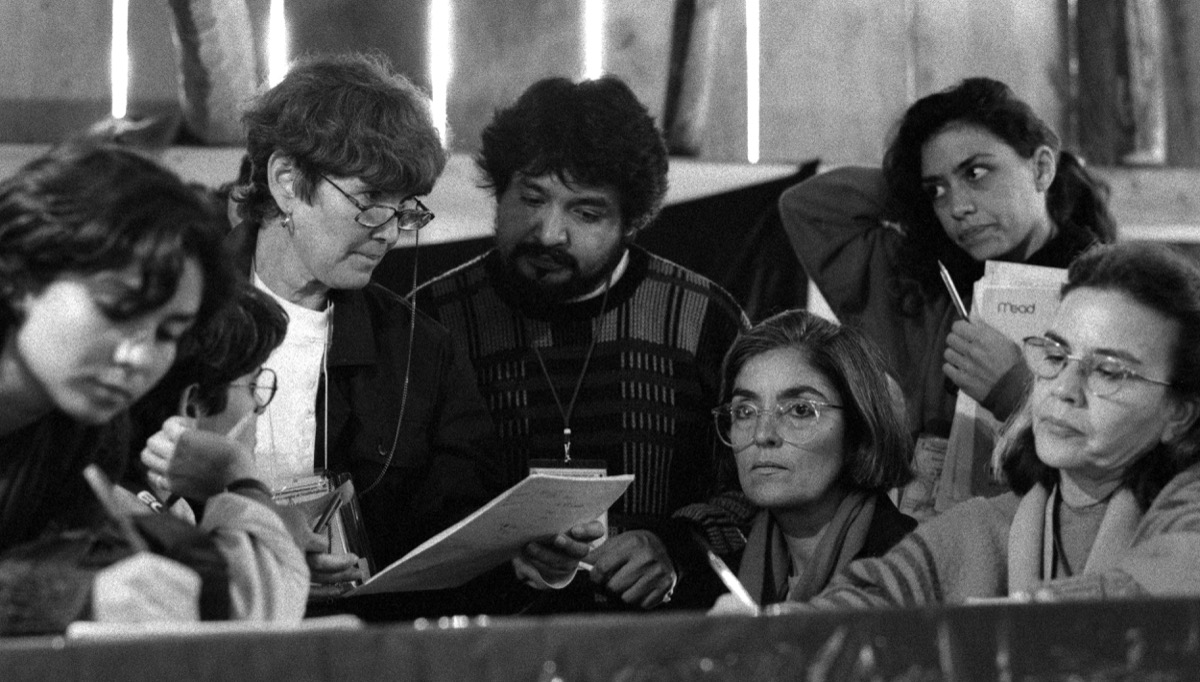
Panoramic view of the 1996 Zapatista Intercontinental Encounter at Oventic, Chiapas
Zapatista Intercontinental Encounter, Oventic, 1996. Thousands gathered for a global dialogue on autonomous governance. Photo: Julian Stallabrass, CC BY 2.0.
Murray Bookchin: Communalism and Libertarian Municipalism
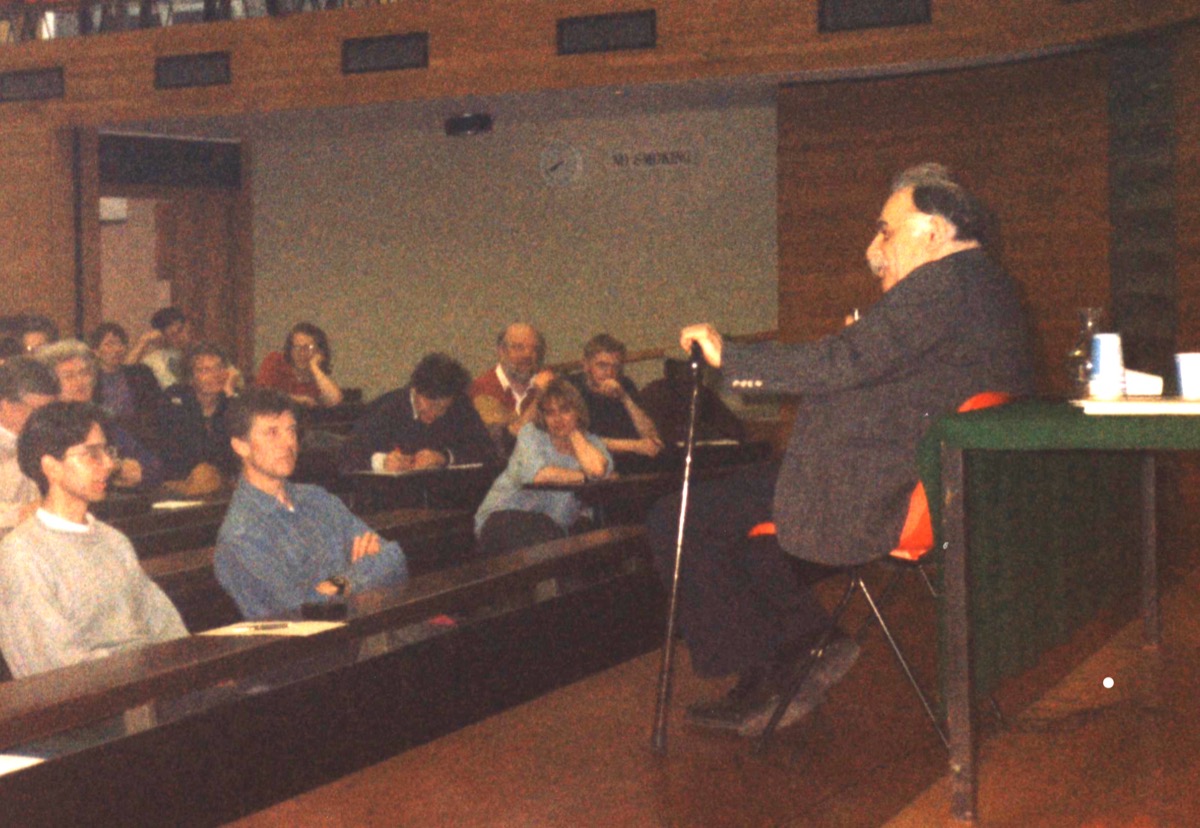
Murray Bookchin lecturing at Cambridge, 1992
Murray Bookchin lecturing at Cambridge, 1992. Photo: Janet Biehl, CC BY-SA 4.0.
The municipality as the unit of revolution
Murray Bookchin argued that the municipality is the scale at which face-to-face democracy remains possible. His program, libertarian municipalism, proposes replacing the nation-state with a confederation of self-governing municipalities organized through popular assemblies. In his later work, Bookchin articulated communalism as a third position: unlike anarchism, it accepts democratic institutions and majority rule; unlike Marxism, it remains fundamentally anti-state and decentralist. PRAXIS encodes Bookchin's architecture directly through the Assembly Playbook, confederal federation, and cooperative economic tools.
MODEL: GOVERNANCE MODEL
Draft your assembly's governance structure: decision-making method, delegation rules, and the boundary between policy and administration.
Define: Who can propose? Who can vote? What constitutes quorum? How does a proposal move from draft to binding decision? Specify majority thresholds. Write the delegation protocol: what mandates delegates carry, how they report back, and the recall procedure (exact steps, not principles). One page, publishable to your community.
Rojava: Democratic Confederalism in Practice
YPJ women fighters standing atop a hill with their flag in Rojava
YPJ fighters in Rojava. Photo: Kurdishstruggle, CC BY 2.0.
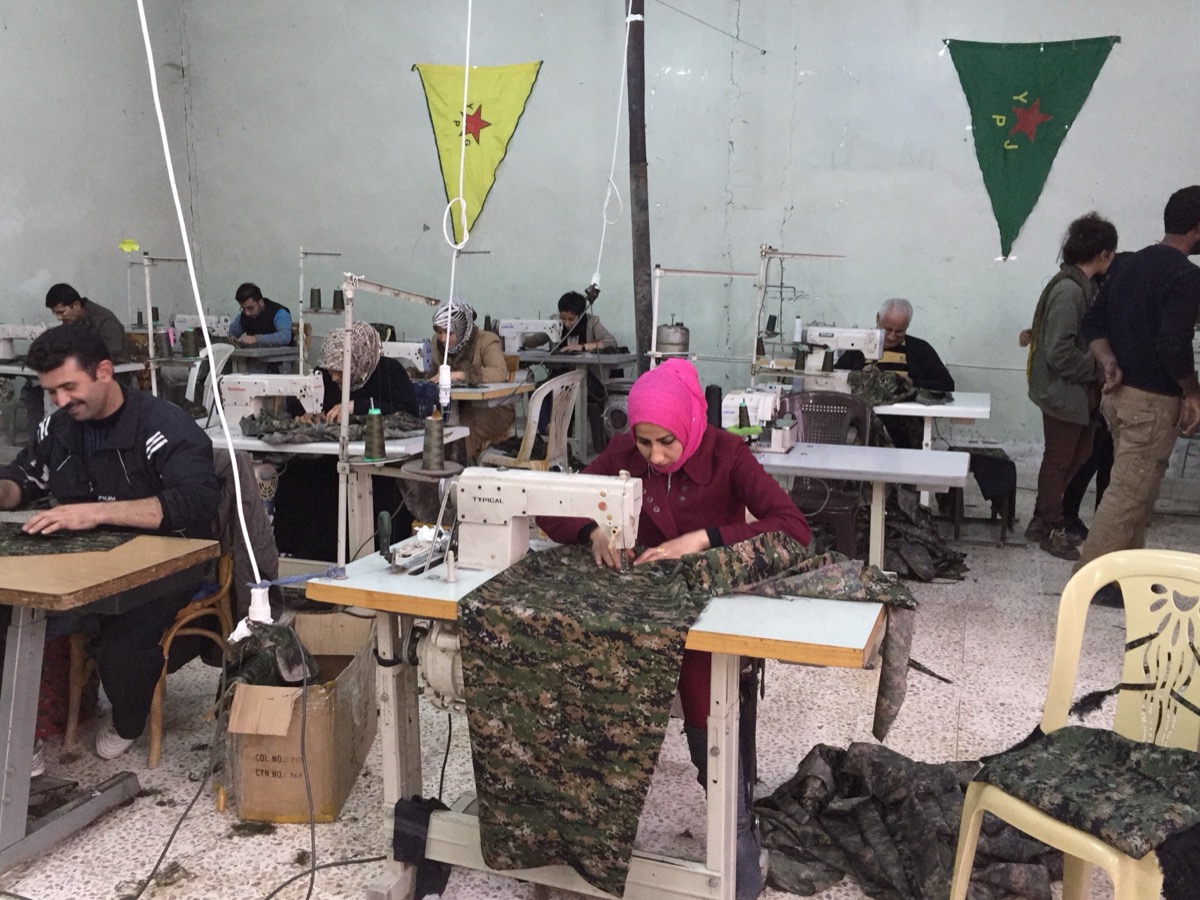
Workers in a sewing cooperative in Rojava
Sewing cooperative in Rojava. Photo: Janet Biehl, CC BY-SA 2.0.
Bookchin's theory, implemented at the scale of millions
In the autonomous regions of North and East Syria, the Kurdish freedom movement adopted Bookchin's vision and built a functioning multi-ethnic democratic governance system serving approximately five million people, constructed during an active civil war. The system operates through communes of 100-350 households, with co-chairs at every level (one of whom must be a woman), parallel women's governance structures, and cooperative economics where profits are split between reinvestment, workers, and community needs.
BUILD: COMMITTEE STRUCTURE
Design your assembly's committee system: which standing committees exist, their scope, membership rules, and reporting cadence.
Minimum six committees (adapt Rojava's model): governance, care/wellbeing, youth, conflict resolution, self-defense/safety, economics. For each: scope (one sentence), membership rules (open/elected/rotating), meeting frequency, reporting format to the full assembly. Add your co-chair or parity requirement. Produce an org chart.
The Zapatistas: Thirty Years of Autonomous Governance
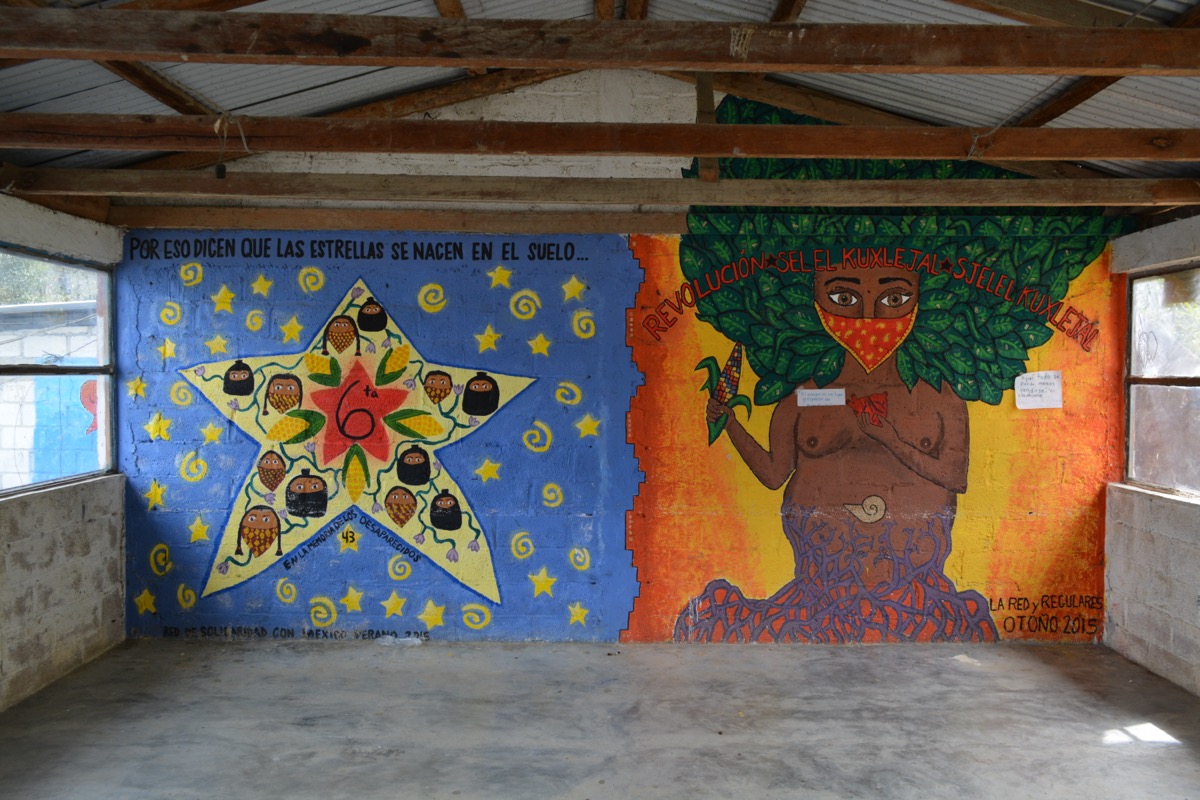
Classroom inside a Zapatista autonomous school at the Oventic Caracol, Chiapas
Zapatista autonomous school, Oventic Caracol. Photo: ProtoplasmaKid, CC BY-SA 4.0.
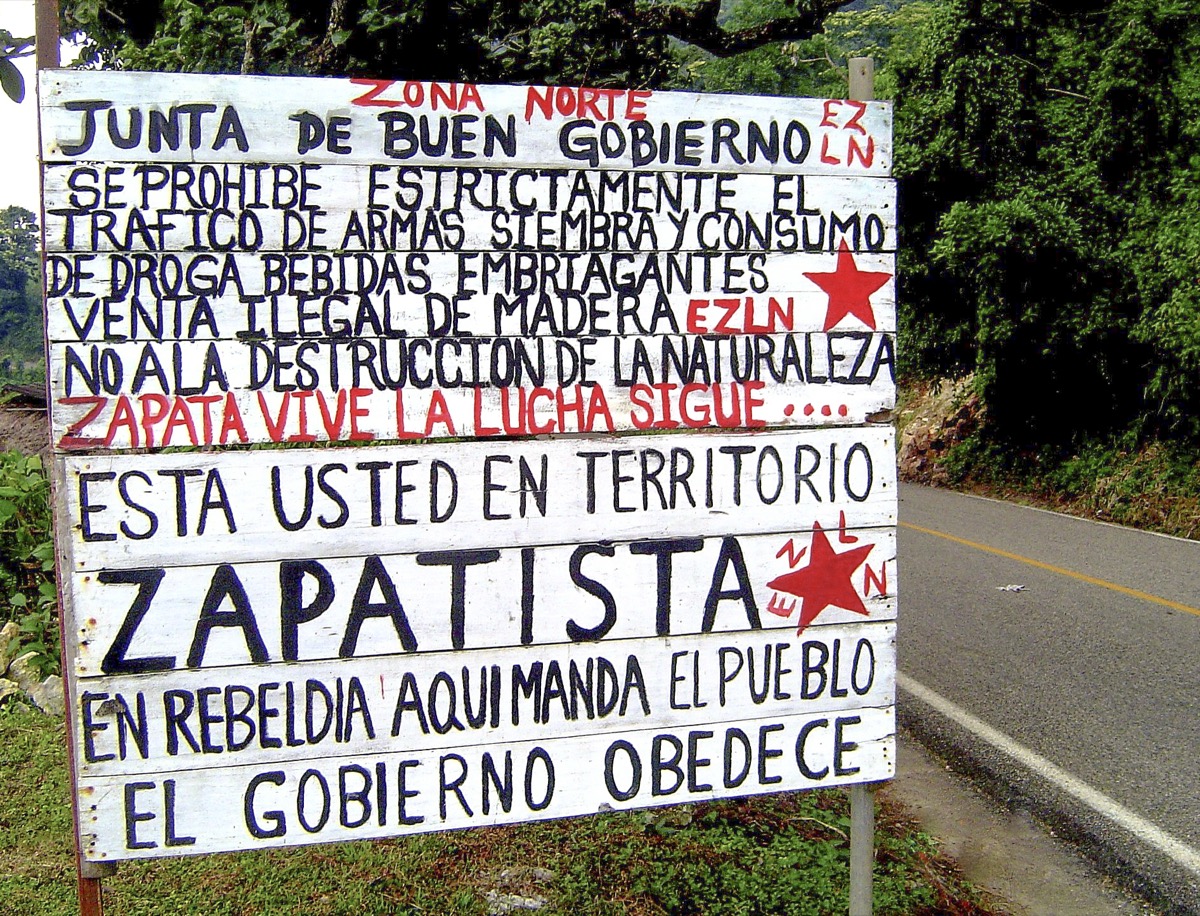
Sign at entrance to Zapatista autonomous territory: Here the people rule, the government obeys
"Here the people rule, the government obeys." Photo: Matthew T Rader, CC BY-SA 4.0.
Mandar obedeciendo: lead by obeying
Since 1994, the Zapatistas have maintained autonomous governance in Chiapas, building their own schools, clinics, courts, and cooperatives entirely outside the Mexican state. Their most radical contribution: they do not seek to seize state power. All authority positions are unpaid and rotating. Communities retain the right to revoke mandates at any time. They have restructured their governance at least three times, most recently in 2023, demonstrating a willingness to adapt structures to changing conditions.
BUILD: ACCOUNTABILITY FRAMEWORK
Write your assembly's accountability framework: how leaders are selected, what mandates they carry, how they are evaluated, and how they are recalled.
Four sections. Selection: nomination process, eligibility criteria, term length. Mandate: what the delegate is authorized to decide vs. what requires assembly approval. Evaluation: quarterly review format, who conducts it, what metrics matter. Recall: trigger conditions (petition threshold, automatic review), timeline, interim process. Model this after "lead by obeying": the delegate implements, the assembly decides.
GUIDE: FIRST ASSEMBLY FACILITATION
Write a step-by-step facilitation guide for running your first community assembly: from room setup through closing circle.
Twelve steps. (1) Venue: accessibility checklist, seating arrangement (circle, not rows), AV setup. (2) Pre-meeting: agenda published 72 hours prior, childcare arranged, translation confirmed. (3) Opening: welcome, land acknowledgment, community agreements read aloud. (4) Introductions: format and time limit. (5) Agenda review: additions from floor, time allocation. (6) Discussion: speaking stack, hand signals, time warnings. (7) Proposals: format, amendment process. (8) Decision: voting method, recording results. (9) Action items: who, what, by when. (10) Announcements. (11) Evaluation: one word from each participant. (12) Closing: next meeting date confirmed. Include a printable one-page cheat sheet for first-time facilitators.
MODEL: DECISION-MAKING FRAMEWORK
Choose and document your assembly's decision-making model: when to use consensus, consent, majority vote, or delegation.
Decision matrix. Rows: decision types (operational, policy, constitutional, emergency). Columns: method (consensus, consent-based, supermajority, simple majority, delegated authority), when to use it, quorum requirement, time limit, fallback if no agreement. Include definitions: consensus (all agree), consent (no one objects), majority (51%+), supermajority (67%+). Name the specific decisions that require each method. One page, posted in every meeting space.
SOP: MEETING DOCUMENTATION
Write the standard operating procedure for documenting assembly meetings: who takes notes, what format, where they're published, and the review process.
Five sections. Roles: primary notetaker (rotating), backup notetaker, reviewer. Template: date, attendees, agenda items, discussion summary, decisions made (exact wording), action items (person, task, deadline), dissenting opinions recorded. Publication: where minutes are posted (wiki, shared drive, physical bulletin), timeline (within 48 hours). Review: who approves before publication, correction process. Archive: retention policy, searchability, access permissions.
The Assembly Tradition: A Lineage, Not an Invention
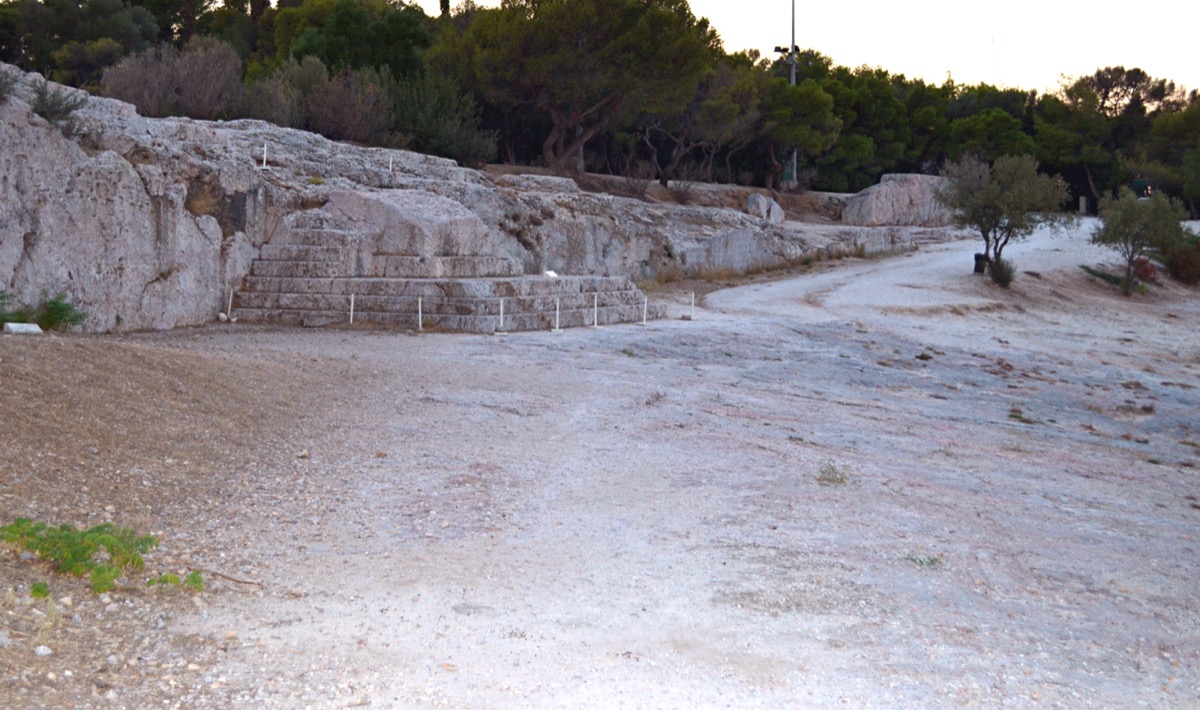
The bema (speaker's platform) on the Pnyx hill in Athens, where the Ekklesia met
The bema on the Pnyx, Athens, where citizens addressed the democratic assembly. Photo: GeorgeKokkos, CC BY-SA 4.0.
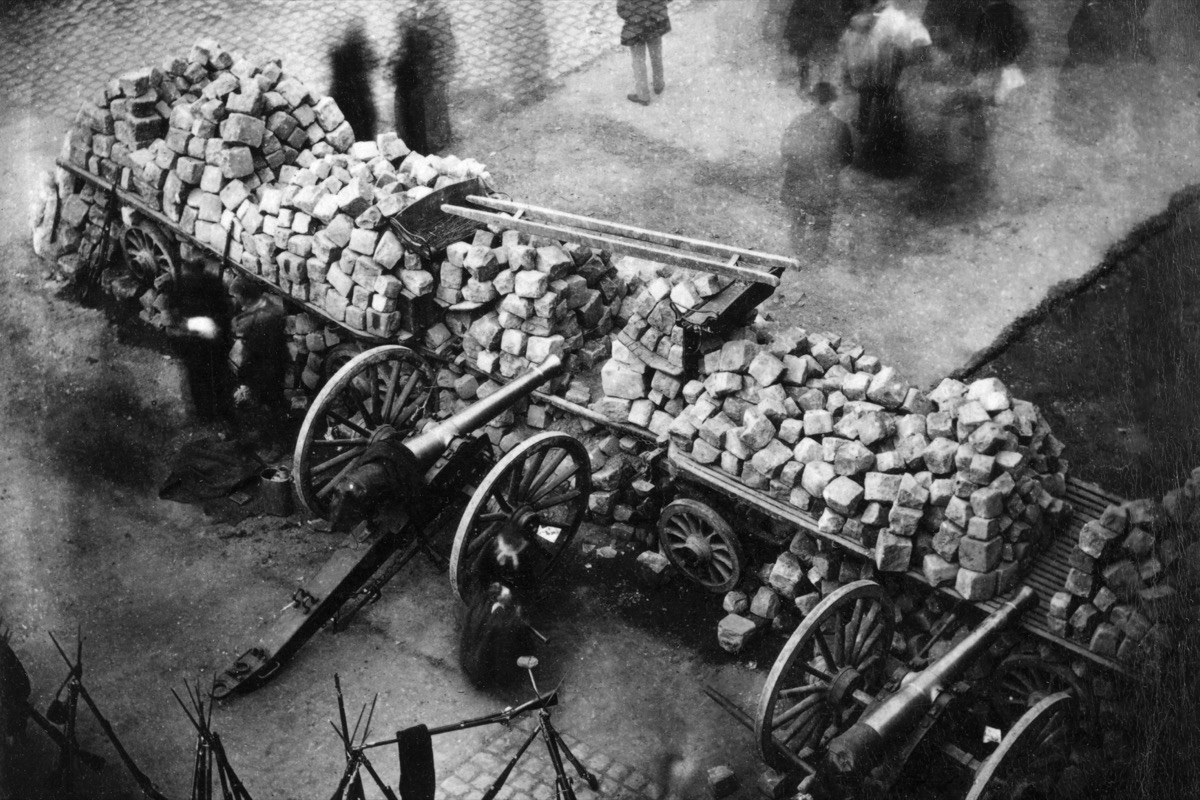
Barricades of the Paris Commune, 1871
Barricades of the Paris Commune, 1871. Photo: Pierre-Ambrose Richebourg, public domain.
Athenian Ekklesia
The original direct democratic assembly: all male citizens participating in collective governance of the polis. Bookchin drew on the Athenian concept of politics as direct self-management.
New England Town Meetings
Among the only surviving modern institutions where citizens regularly participate in face-to-face assemblies that deliberate binding decisions. Self-governance is a skill developed through practice, not a right passively held.
Paris Commune (1871)
Elected council members were considered mandated delegates, recallable at any time. At least 28 revolutionary clubs operated across Paris, functioning as the link between the mass movement and the Council.
Spanish Revolution (1936)
Workers in Barcelona organized themselves after the coup. Neighborhood committees ran the city. In Catalonia, 75% of the economy came under worker control.
Porto Alegre Participatory Budgeting (1989)
Proved citizens can allocate real public money through democratic assemblies at city scale. Sewer and water connections rose from 75% to 98%. Over 11,500 municipal PB processes now operate globally.
Occupy Wall Street (2011)
Demonstrated that consensus process at mass scale produces slow decision-making and vulnerability to disruption. PRAXIS adopts majority-rule democracy in assemblies, not consensus paralysis.
Chilean Cabildos Abiertos (2019)
Over 300 self-convened neighborhood assemblies erupted within weeks. Without persistent infrastructure, the assemblies were short-lived and the energy dissipated.
Minneapolis (2020)
Mutual aid networks served 18,000 people. Within eighteen months: volunteer exhaustion collapsed networks, the ballot measure failed, and the police budget grew. The definitive case for persistent democratic infrastructure.
The Synthesis
What PRAXIS takes from each tradition
From Bookchin: the neighborhood assembly as the fundamental unit of governance; confederalism as the scaling mechanism; majority-rule democracy over consensus paralysis; the municipality as the arena of transformation. From Rojava: the commune model proven at the scale of millions; gender parity as structural architecture; cooperative economics under democratic control; the lesson that international federation is a survival requirement, not an aspiration. From the Zapatistas: thirty years of proof that autonomous governance outside the state is sustainable; mandar obedeciendo as a design principle for accountability; restorative justice; the willingness to restructure when structures fail; the principle that revolution is a question, not an answer. From Porto Alegre: empirical evidence that participatory budgeting produces superior outcomes at city scale. From Occupy and Minneapolis: the negative proof that protest without infrastructure, consensus without structure, and energy without institutions produces nothing durable. PRAXIS is the technological infrastructure that these traditions required and did not have.
Functional Architecture

Seven functions, filled by the ecosystem.

PRAXIS is organized around seven functional needs that any community practicing democratic self-governance will encounter. Each function is filled by existing open-source tools, not custom software. What is shared across the network is the practice, not the product. No single tool is a dependency.

Map your community's functional needs to specific tools. Every tool listed is open-source and deployable today.
1. Governance: Making Real Decisions Together
The democratic core. Participatory budgeting, citizen assemblies, formal proposals, structured debate, and voting. The presence of real decisions and real outcomes is what distinguishes PRAXIS from every civic engagement initiative that preceded it.
GOVERNANCE
Decidim
Modular participatory democracy framework for consultations, budgeting, proposals, and assemblies. Used by Barcelona, Helsinki, and hundreds of cities.
AGPL-3.0 Self-hosted Mature
decidim.org →
GOVERNANCE
Consul Democracy
Citizen participation portal for debates, proposals, budgeting, and voting. Deployed by 250+ cities worldwide.
AGPL-3.0 Self-hosted Mature
consuldemocracy.org →
GOVERNANCE
Loomio
Collaborative decision-making for groups. Proposals, polls, and structured discussion. Born from Occupy, run as a worker co-op.
AGPL-3.0 Cloud / Self-hosted Mature
loomio.com →
DELIBERATION
Pol.is
Surfaces consensus and division across large groups using computational methods. Used by Taiwan's digital democracy program.
AGPL-3.0 Cloud / Self-hosted Mature
pol.is →
GUIDE: THE ASSEMBLY HOW-TO
Write a practical, step-by-step guide for running your first assembly: from the initial organizing meeting of 5 people through a functioning assembly of 50.
Three phases. Phase 1 (5 people): choose a meeting space, set a date, write a one-page founding statement, assign roles (facilitator, notetaker, outreach). Phase 2 (5-20 people): run three consecutive meetings with a published agenda, establish decision-making rules (consensus or vote, quorum threshold), launch one working group. Phase 3 (20-50 people): formalize committee structure, run a participatory budgeting exercise with real money (even $500), produce your first public-facing decision. Include: a sample agenda template, a facilitation cheat sheet, and the three mistakes every new assembly makes (and how to avoid them).
2. Engagement: The Civic Engine
The one thing PRAXIS builds from scratch. The Comrade Agent tracks your activities, assigns tasks based on the network, and generates your Revolutionary Calendar. Twelve civic roles provide identity within the movement before a participant has completed any traditional organizing work.
PLAN: PHYSICAL EVENTS CALENDAR
Design your assembly's recurring physical events calendar: what happens weekly, monthly, and quarterly, who organizes each event, and how the Comrade Agent integrates them into participants' Revolutionary Calendars.
Three tiers. Weekly: working group meetings (staggered across the week), community office hours (open to public), mutual aid distribution. Monthly: full general assembly, community potluck or social event, skill-share workshop. Quarterly: public town hall (invite non-members), network-wide day of action, retrospective and planning session. For each event type: format, duration, venue requirements, minimum attendance for viability, who is responsible for logistics. The Comrade Agent should surface these events to participants based on their class and working group membership.
ENGAGEMENT
Civic Engine
Engagement progression system converting civic participation into visible roles, quests, and Civic Points. The one thing PRAXIS builds from scratch.
Custom Self-hosted In Development
3. Visibility: Data and Decision Support
Tools that make democratic governance accessible to first-time participants: budget visualization, participation analytics, outcome tracking, and geographic mapping of community needs and power structures.
ANALYTICS
Metabase
Visual query builder and dashboard sharing. Makes governance data navigable without specialized expertise.
AGPL-3.0 Self-hosted Mature
metabase.com →
MAPPING
OpenStreetMap
World's largest open geographic database. Community-maintained mapping for power structure and resource visibility.
ODbL Cloud / Self-hosted Mature
openstreetmap.org →
CRISIS MAPPING
Ushahidi
Collects user-generated reports and maps them geographically. Used for disaster response and community reporting since 2008.
AGPL-3.0 Cloud / Self-hosted Mature
ushahidi.com →
GUIDE: HORIZONTAL PROJECT MANAGEMENT
Write a guide to managing projects without hierarchy: how decisions get made, how work gets distributed, how accountability works, and which tools to use when nobody is the boss.
Four sections. (1) Decision flow: who can start a project (anyone), how it gets resourced (proposal to working group or assembly), how scope changes are approved (consent-based, not top-down). (2) Work distribution: task boards visible to all (Kanban on a wiki, shared spreadsheet, or Taiga), voluntary sign-up with the Comrade Agent suggesting tasks to fill gaps, rotating roles for recurring work. (3) Accountability: weekly check-ins (async via forum post), blockers raised publicly, no blame culture but clear "this didn't get done and here's what we're doing about it." (4) Tools: Taiga or Wekan for Kanban, Nextcloud for documents, Discourse for async discussion. Include a one-page "project kickoff template" any working group can use.
4. Resilience: Communication When Infrastructure Fails
Under normal conditions, assemblies coordinate through standard tools. When internet infrastructure fails, the practice degrades gracefully through tools designed for exactly that scenario.
COMMUNICATION
Matrix / Element
Decentralized, end-to-end encrypted communication. Federates across servers. Used by French and German governments.
Apache-2.0 Self-hosted Mature
matrix.org →
COMMUNICATION
Signal
Gold standard encrypted messaging and calls. Operated by a nonprofit. Audited repeatedly.
AGPL-3.0 Cloud Mature
signal.org →
RESILIENT MESSAGING
Briar
Syncs over Tor, Wi-Fi, or Bluetooth. Functions when the internet is completely down.
GPL-3.0 P2P Mature
briarproject.org →
MESH NETWORKING
Meshtastic
Long-range mesh networking on inexpensive LoRa radio hardware. No towers, no ISPs, no internet required.
GPL-3.0 Hardware Mature
meshtastic.org →
SOP: CONFLICT MANAGEMENT
Write your assembly's conflict management protocol: how internal disputes are surfaced, mediated, and resolved, and how external conflicts (legal threats, hostile actors, public opposition) are handled.
Two tracks. Internal: (1) Early intervention: any member can raise a concern to a designated mediator, confidentially. (2) Mediation: trained mediator meets with parties separately, then together. Ground rules: no interrupting, no personal attacks, focus on needs not positions. (3) Circle process: if mediation fails, a restorative circle with affected community members. (4) Assembly review: persistent or structural conflicts go to the full assembly for a binding decision. External: (1) Legal threats: who to call (legal aid contact, NLG chapter), what to document, who speaks publicly. (2) Hostile actors: de-escalation protocol, documentation, when to involve authorities vs. community response. (3) Public opposition: designated spokesperson, message discipline, counter-narrative strategy. Train two mediators before you need them.
MODEL: FINANCIAL SUSTAINABILITY
Design your assembly's financial sustainability model on a DIY budget: revenue streams, cost structure, and the governance process for spending decisions.
Three pillars. (1) Revenue: membership dues on a sliding scale ($0-50/month, pay what you can), Open Collective for transparent crowdfunding, grant applications (target three per year), revenue-generating events (skill-shares, community dinners, cooperative sales), in-kind contributions (donated space, pro-bono services). (2) Costs: keep fixed costs under $200/month (hosting, communication tools, meeting space). Variable: event costs, printing, mutual aid fund. (3) Governance: all spending over $100 requires working group approval, over $500 requires assembly vote, monthly financial report posted publicly. Budget managed via Open Collective so every transaction is visible. Goal: financial independence within 12 months. No single funding source should exceed 30% of total revenue.
5. Economics: Cooperative Infrastructure
How governance decisions translate into economic alternatives that participants can live inside, not merely vote on. Connecting economic decisions to the governance process so they flow from democratic deliberation.
COOPERATIVE ECONOMY
Open Food Network
Open-source marketplace connecting local farmers, food hubs, and cooperatives. 2,500+ enterprises across 20 countries.
AGPL-3.0 Self-hosted Mature
openfoodnetwork.org →
TRANSPARENT FINANCE
Open Collective
Transparent fundraising and budget management. Every transaction is public.
MIT Cloud / Self-hosted Mature
opencollective.com →
GUIDE: STARTING A NON-PROFIT
Write a practical guide to incorporating your assembly as a non-profit: entity type selection, filing process, governance requirements, and the tradeoffs of formalization.
Five sections. (1) Entity types: 501(c)(3) for tax-deductible donations (limits political activity), 501(c)(4) for civic engagement (allows lobbying, no tax deduction), fiscal sponsorship (use an existing non-profit as your legal umbrella, fastest path). Recommend fiscal sponsorship for Year 1, independent filing for Year 2+. (2) Filing: state incorporation (articles of incorporation template), EIN application, IRS Form 1023-EZ for small orgs under $50K revenue. (3) Governance: board of directors (minimum 3, drawn from assembly), bylaws template, annual meeting requirements. (4) Compliance: annual state filing, 990-EZ tax return, public disclosure requirements. (5) Tradeoffs: formalization enables grants and bank accounts but creates legal obligations and potential co-optation. The assembly remains sovereign; the non-profit is a legal tool, not the movement. Include a decision tree: "Should we incorporate now or use fiscal sponsorship?"
GUIDE: WORKER COOPERATIVES
Write a practical guide to starting a worker cooperative connected to your assembly: legal structure, governance, capitalization, and how surplus flows back to the community.
Four sections. (1) Structure: articles of incorporation as a cooperative corporation (varies by state), operating agreement template, member buy-in structure (keep it low: $100-500, with payment plans). (2) Governance: one member one vote, elected board from worker-members, annual member meeting, patronage dividend formula. (3) Capitalization: member equity contributions, community loan funds (Cooperative Fund of New England, Shared Capital Cooperative), SBA loans, crowdfunding. Target: enough runway for 6 months of operations. (4) Assembly integration: cooperative reports quarterly to the assembly, surplus allocation voted on by members with a percentage (10-20%) flowing to the assembly's mutual aid fund. Include three cooperative types that work well at small scale: food co-op, cleaning cooperative, tech services cooperative. Link to the Democracy at Work Institute and the U.S. Federation of Worker Cooperatives for templates.
6. Federation: Connecting Autonomous Cities
Bookchin's confederalism, implemented as a coordination practice: autonomous assemblies in different cities sharing proposals, outcomes, and methodology without any center having authority over the others. Federation is a practice first and a protocol second. In the near term: shared documentation, regular coordination calls, and a common Assembly Playbook. As the network grows, the Civic Engine connects across cities so that earned standing carries across the federation.
GUIDE: HOW TO FEDERATE
Write a practical guide to connecting your assembly with another city's assembly: first contact, shared protocols, what to coordinate and what to leave autonomous.
Five steps. (1) Find each other: reach out to assemblies in nearby cities through the PRAXIS network, mutual aid networks, DSA chapters, or cooperative alliances. (2) First contact: a joint video call between 3-5 representatives from each assembly. Share your founding documents, governance model, and current priorities. (3) Shared protocols: agree on a communication channel (shared Matrix space), meeting cadence (monthly inter-assembly call), and a shared document format for proposals and outcomes. (4) What to coordinate: methodology sharing (what facilitation techniques work), mutual support (send experienced facilitators to help new assemblies), joint campaigns when interests align, shared training resources. (5) What stays autonomous: governance decisions, membership, budgets, local priorities, tool selection. No assembly has authority over another. The federation is a practice of mutual aid between assemblies, not a hierarchy. Include a one-page "federation agreement" template both assemblies sign.
7. Media: Movement-Owned, Algorithm-Free
The Fediverse provides decentralized video hosting, image sharing, blogging, music distribution, and discussion, all interconnected through open protocols, all free from corporate algorithms.
VIDEO
PeerTube
Decentralized, federated video hosting. No ads, no tracking. Developed by a French nonprofit.
AGPL-3.0 Self-hosted Mature
joinpeertube.org →
IMAGES
Pixelfed
Decentralized image sharing with chronological feeds. No algorithmic manipulation.
AGPL-3.0 Self-hosted Mature
pixelfed.org →
PUBLISHING
Ghost
Open-source publishing with built-in newsletters. 100,000+ active websites.
MIT Cloud / Self-hosted Mature
ghost.org →
GUIDE: SOCIAL MEDIA WITHOUT FEEDING THE BEAST
Write a social media strategy that uses corporate platforms for reach without depending on them: how to post, what to post, where to redirect, and how to build an audience you own.
Four principles. (1) Post there, live here: use Instagram, TikTok, Twitter/X, and Facebook for discovery, but every post should drive people to your owned infrastructure (Ghost newsletter, Matrix space, Discourse forum). Never make a corporate platform your primary home. (2) Content that survives the algorithm: short-form video (<60s) of real assembly moments, not polished propaganda. Behind-the-scenes of mutual aid. Before/after of community projects. The algorithm rewards authenticity and conflict; give it authenticity. (3) Cross-post everything: same content to all platforms simultaneously using Buffer or similar. Spend 30 minutes/week scheduling, not hours/day posting. (4) Build the exit ramp: every bio links to your Ghost site. Every post ends with "join us" + your owned signup link. Track: how many followers on corporate platforms vs. how many on your email list. When the list exceeds 500, you can survive being deplatformed. Include a weekly content calendar template and the one metric that matters: newsletter signups per week.
PLAN: DEPLOYMENT
Draft your 90-day tool deployment plan: which tools launch in week 1, week 4, and week 12, with named owners for each.
Three-column table. Column 1: Tool name and function. Column 2: Owner (the person who installs, configures, and trains others). Column 3: Launch date and "ready" criteria (what must be true before the community starts using it). Week 1: communication (Matrix or Signal). Week 4: governance (Decidim or Loomio). Week 12: visibility (dashboards, maps). Sequence by dependency, not ambition.
ASSESS: REDUNDANCY MATRIX
Build a redundancy matrix: for each critical function, name the primary tool, the backup tool, the migration trigger, and the migration procedure.
Table with five columns. Function (governance, communication, data, mesh). Primary tool. Backup tool. Trigger (what failure condition causes the switch: downtime threshold, security breach, maintainer abandonment). Procedure (who initiates migration, where data exports go, communication plan to members, estimated switchover time). No function should have zero backups.
BUILD: ARCHITECTURAL DECISION RECORD
Write three Architectural Decision Records (ADRs) for your deployment: one for governance tooling, one for communication, one for data sovereignty.
ADR format per record: Title, Status (proposed/accepted/deprecated), Context (what problem you're solving), Decision (what you chose and why), Consequences (tradeoffs accepted). Example: "ADR-001: Decidim for participatory budgeting. Context: need structured proposal and voting. Decision: Decidim over Consul because our team has Ruby experience. Consequence: higher hosting requirements, but stronger PB workflow."
TOOL: GOVERNANCE PLATFORM SELECTION
Evaluate Decidim, Loomio, and Consul for your assembly's governance needs: feature comparison, hosting requirements, and community fit.
Three-column comparison. For each platform: decision-making features (proposals, voting, budgeting), hosting model (self-hosted vs. SaaS), technical requirements (Ruby/Rails, PostgreSQL, Docker), community size it serves best, localization support, and active maintenance status. Score each 1-5 on: ease of setup, feature depth, community support, data sovereignty. Recommend one and explain why.
TOOL: COMMUNICATION STACK
Design your communication stack: select and configure the tools for real-time chat, async discussion, video calls, and emergency alerts.
Four layers. Real-time: Matrix/Element vs. Signal vs. Rocket.Chat (compare federation, encryption, self-hosting). Async: Discourse vs. Forem vs. mailing lists (compare threading, moderation, search). Video: Jitsi vs. BigBlueButton (compare capacity, recording, breakout rooms). Emergency: Meshtastic mesh network vs. SMS tree vs. radio (compare range, infrastructure independence, setup time). For each layer, name the primary tool and the offline fallback.
TOOL: DATA SOVEREIGNTY SETUP
Set up your data sovereignty infrastructure: choose hosting, configure backups, define access controls, and write the data governance policy.
Four components. Hosting: VPS provider selection criteria (jurisdiction, payment methods, uptime SLA). Backups: 3-2-1 strategy (3 copies, 2 media types, 1 offsite), automated schedule, tested restoration procedure. Access: role-based permissions matrix (admin, moderator, member, public). Policy: one-page data governance document covering what is collected, who can access it, retention period, deletion process, and breach notification procedure.
Political Authority

Assemblies without power are book clubs.

The most beautifully designed governance platform in the world is worthless if the decisions it produces have no binding force. People will attend one assembly out of curiosity. They will attend a second if the first one was good. They will not attend a fifth if nothing they decided in the first four actually changed anything. The question that determines whether PRAXIS succeeds or dies is not technical. It is political: how do assemblies get teeth?

Occupy Wall Street general assembly meeting, 2011
Occupy Wall Street general assembly, 2011. Proof that people will self-organize. Proof that without infrastructure, the energy dissipates. Photo: David Shankbone, CC BY 3.0.
There is no single path to political authority. The answer is to run all of them simultaneously, because each path's weakness is covered by another path's strength. A campaign that fails at the ballot box but turns out 10,000 people has built a list, trained a cohort, and demonstrated a constituency. The movement that only fights battles it can win never fights at all.
The Five Paths to Political Authority
1
Petitions and Ballot Initiatives
The lowest-friction path to binding authority. An assembly drafts a ballot initiative, participants collect signatures, the measure goes on the ballot. Even if it loses, the assembly now has a list of supporters and a cohort of trained canvassers.
The pitfall
Petitions get ignored. Legal challenges drain resources. Even when an initiative passes, implementation depends on the same bureaucracy the initiative was designed to circumvent. Petitions are a tool, not a strategy.
2
Electoral Municipalism
Run candidates for city council. Not to participate in the system as it exists, but to use the system's own mechanisms to transfer authority out of it. The specific demand: charter changes that give neighborhood assemblies binding authority over portions of the municipal budget.
The pitfall
Elections co-opt. The system absorbs radical energy and redirects it into procedural channels. Every candidate must go in knowing they will be pressured to become a normal politician, and the assembly must maintain enough independent power to hold them accountable.
3
Autonomous Governance
Operate outside the state. Provide the services the state does not, and provide them better. When the assembly coordinates mutual aid that reaches people faster than FEMA, the assembly has authority because it has earned it through competence.
The pitfall
Autonomous zones get crushed. The state does not passively accept parallel authority. Autonomy without the capacity to defend itself is temporary. The autonomous path must always be combined with the other paths.
4
Direct Action and Confrontation
Strikes. Occupations. Blockades. Direct action communicates a political reality that petitions and elections cannot: that a constituency exists, that it is organized, and that it will not wait for permission to assert its interests.
The pitfall
Direct action burns people out. It exposes participants to legal risk and emotional weight. Without an institutional home to return to, direct action produces temporary spectacle and permanent burnout.
5
Moral Authority and Narrative Power
The power of being visibly, undeniably right. When an assembly publishes its budget analysis and the analysis is better than the city council's, that is moral authority. When mutual aid responds to a disaster three days before FEMA arrives, that is moral authority.
The pitfall
Being right is not enough. Moral authority without political organization is a newspaper editorial. Narrative power must be connected to every other path: the story supports the petition, the petition funds the campaign, the campaign builds the base.
PLAN: CAMPAIGN
Draft your assembly's first campaign plan: the target, the path (petition/electoral/autonomous/direct action/narrative), the timeline, and the win condition.
One page. Target: the specific decision, budget line, or policy. Path: which of the five paths, and why this one first. Team: who leads, who canvasses, who documents. Timeline: week-by-week for 90 days. Win condition: what "success" means even if the campaign loses (signatures collected, volunteers trained, press coverage, list built). Budget: what it costs. End with: "If this campaign fails, the next one starts from _____."
SOP: DELEGATE MANDATE TEMPLATE
Write the mandate template your assembly gives every delegate and candidate it endorses: scope of authority, reporting requirements, and recall trigger.
One-page contract. Header: delegate name, position, term dates. Section 1 (Mandate): the specific decisions they are authorized to make, and the specific decisions that require assembly vote. Section 2 (Reporting): frequency (weekly/monthly), format (written/in-person), what data they must provide. Section 3 (Recall): petition threshold (e.g., 20% of active members), review process, timeline from petition to vote. Both parties sign.
MODEL: POWER MAPPING
Map the power structures in your city: who holds formal authority, who holds informal influence, where are the pressure points, and where are the allies.
Three-layer map. Layer 1 (Formal): elected officials, appointed boards, regulatory agencies. For each: name, role, term expiration, key decisions they control. Layer 2 (Informal): major employers, property owners, media owners, religious leaders, union heads. For each: what they influence, who they're connected to, whether they're potential allies or obstacles. Layer 3 (Grassroots): existing community organizations, activist groups, mutual aid networks, cultural institutions. For each: overlap with your mission, relationship status, contact person. Draw the connections between layers. Identify the three decision-makers whose support would most accelerate your assembly's legitimacy.
GUIDE: RUNNING A PUBLIC COMMENT CAMPAIGN
Write a step-by-step guide for mobilizing your assembly to participate in a public comment period or city council meeting.
Timeline format. 14 days out: identify the agenda item, research the issue, draft talking points. 10 days out: distribute talking points to assembly members, sign up for public comment slots. 7 days out: practice session (5-minute presentations, timed). 3 days out: confirm attendees, arrange transportation, assign roles (speakers, note-takers, social media). Day of: arrive early, sit together, speak in coordinated sequence (each person covers one point), document everything. Day after: debrief, publish coverage, follow up with officials. Include a one-page "how to give public comment" handout for first-timers.
Technical Infrastructure

Harvest the ecosystem. Do not reinvent it.

PRAXIS is not a single application. It is a strategy for composing existing open-source tools into a coherent infrastructure for democratic self-governance. The ecosystem of resilient, democratic, and decentralized technology is already large and growing. The work is curation, integration, and training, not development from scratch.

Audit your community's technical needs. Adopt existing tools before building anything new.
The principle: adopt before you adapt, adapt before you build. If an open-source tool does 80% of what an assembly needs, use it. If it needs modification, contribute upstream. Only build from scratch when nothing in the ecosystem addresses the need. The technology layer is a recommended stack, not a proprietary system. Different cities will use different tools based on local capacity.
Governance and Deliberation
GOVERNANCE
Decidim
Modular participatory democracy framework for consultations, budgeting, proposals, and assemblies. Used by Barcelona, Helsinki, and hundreds of cities.
AGPL-3.0 Self-hosted Mature
decidim.org →
GOVERNANCE
Consul Democracy
Citizen participation portal for debates, proposals, budgeting, and voting. Deployed by 250+ cities worldwide.
AGPL-3.0 Self-hosted Mature
consuldemocracy.org →
GOVERNANCE
Loomio
Collaborative decision-making for groups. Proposals, polls, and structured discussion. Born from Occupy, run as a worker co-op.
AGPL-3.0 Cloud / Self-hosted Mature
loomio.com →
DELIBERATION
Pol.is
Surfaces consensus and division across large groups using computational methods. Used by Taiwan's digital democracy program.
AGPL-3.0 Cloud / Self-hosted Mature
pol.is →
VOTING
Vocdoni
Cryptographically verifiable voting with ballot secrecy using zero-knowledge proofs. Supports 300+ organizations.
AGPL-3.0 Cloud / Self-hosted Growing
vocdoni.io →
Communication and Coordination
COMMUNICATION
Matrix / Element
Decentralized, end-to-end encrypted communication. Federates across servers. Used by French and German governments.
Apache-2.0 Self-hosted Mature
matrix.org →
COMMUNICATION
Signal
Gold standard encrypted messaging and calls. Operated by a nonprofit. Audited repeatedly.
AGPL-3.0 Cloud Mature
signal.org →
PRIVATE MESSAGING
SimpleX Chat
No user identifiers, no accounts, no phone numbers, no metadata trail. Messages held temporarily then deleted.
AGPL-3.0 P2P Growing
simplex.chat →
RESILIENT MESSAGING
Briar
Syncs over Tor, Wi-Fi, or Bluetooth. Functions when the internet is completely down.
GPL-3.0 P2P Mature
briarproject.org →
Resilient Networking
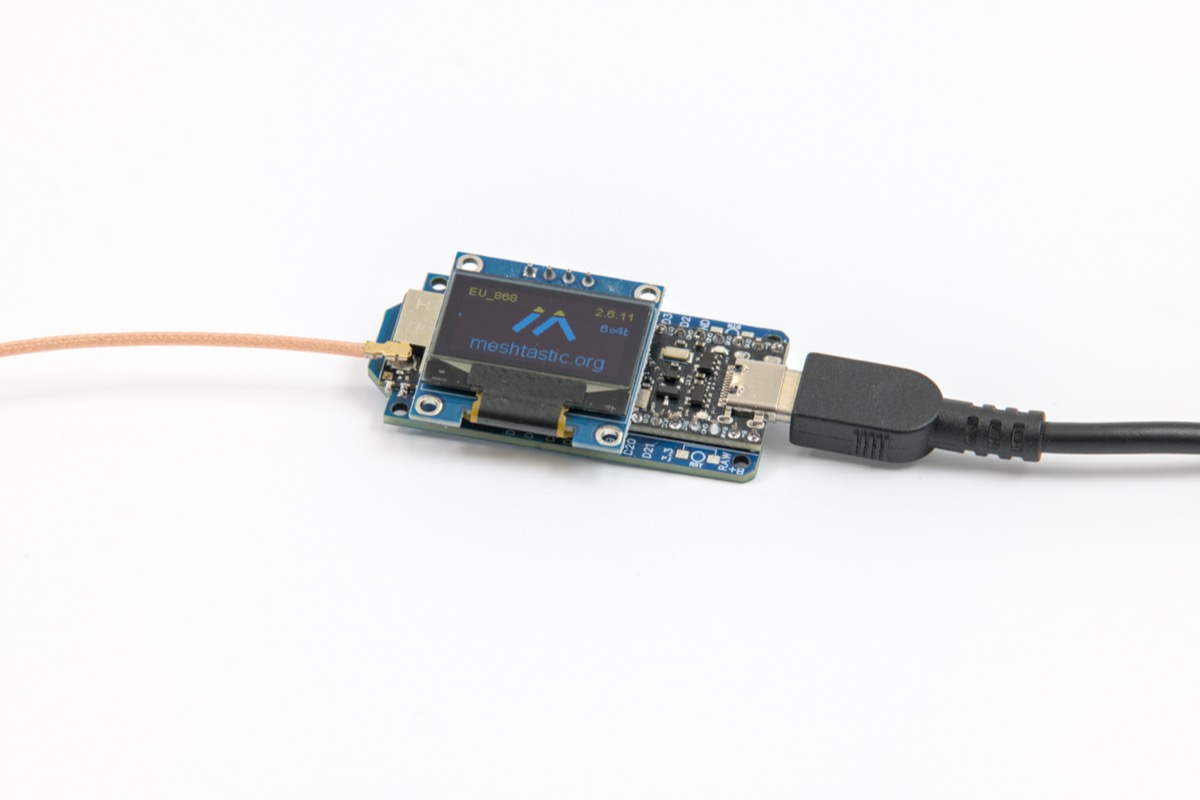
Meshtastic node with LoRa transceiver and display showing mesh network interface
Meshtastic node: LoRa mesh networking without towers, ISPs, or internet. Photo: -stk, CC BY-SA 4.0.
MESH NETWORKING
Meshtastic
Long-range mesh networking on inexpensive LoRa radio hardware. No towers, no ISPs, no internet required.
GPL-3.0 Hardware Mature
meshtastic.org →
MESH NETWORKING
Reticulum
Networking stack running over LoRa, packet radio, Wi-Fi, Ethernet, serial, or optical links. 150bps to 40Mbps.
MIT Hardware / Software Growing
reticulum.network →
OVERLAY NETWORK
Yggdrasil
Encrypted self-healing mesh network. Transport-agnostic, no central servers required.
LGPL-3.0 Software Growing
yggdrasil-network.github.io →
Cooperative Economy and Mutual Aid
COOPERATIVE ECONOMY
Open Food Network
Open-source marketplace connecting local farmers, food hubs, and cooperatives. 2,500+ enterprises across 20 countries.
AGPL-3.0 Self-hosted Mature
openfoodnetwork.org →
COORDINATION
Hylo
Platform for purpose-driven groups. Discussions, requests, offers, projects, events, and geographic mapping.
AGPL-3.0 Cloud / Self-hosted Growing
hylo.com →
TRANSPARENT FINANCE
Open Collective
Transparent fundraising and budget management. Every transaction is public.
MIT Cloud / Self-hosted Mature
opencollective.com →
MEMBER MANAGEMENT
CiviCRM
Community relationship management for nonprofits and advocacy organizations. Tracks members, organizes outreach, coordinates volunteers.
AGPL-3.0 Self-hosted Mature
civicrm.org →
Movement-Owned Media
VIDEO
PeerTube
Decentralized, federated video hosting. No ads, no tracking. Developed by a French nonprofit.
AGPL-3.0 Self-hosted Mature
joinpeertube.org →
IMAGES
Pixelfed
Decentralized image sharing with chronological feeds. No algorithmic manipulation.
AGPL-3.0 Self-hosted Mature
pixelfed.org →
MUSIC
Funkwhale
Decentralized music sharing and listening. Community-run, ad-free.
AGPL-3.0 Self-hosted Growing
funkwhale.audio →
BLOGGING
WriteFreely
Minimalist federated blogging. Clean, distraction-free writing.
AGPL-3.0 Self-hosted Mature
writefreely.org →
PUBLISHING
Ghost
Open-source publishing with built-in newsletters. 100,000+ active websites.
MIT Cloud / Self-hosted Mature
ghost.org →
DISCUSSION
Lemmy
Federated link aggregation and discussion platform. Community-governed.
AGPL-3.0 Self-hosted Mature
join-lemmy.org →
Mapping, Data, and Visibility
MAPPING
OpenStreetMap
World's largest open geographic database. Community-maintained mapping for power structure and resource visibility.
ODbL Cloud / Self-hosted Mature
openstreetmap.org →
CRISIS MAPPING
Ushahidi
Collects user-generated reports and maps them geographically. Used for disaster response and community reporting since 2008.
AGPL-3.0 Cloud / Self-hosted Mature
ushahidi.com →
CUSTOM MAPPING
uMap
Create interactive custom maps with no coding. 1.3M+ maps created.
WTFPL Cloud / Self-hosted Mature
umap.openstreetmap.fr →
ANALYTICS
Metabase
Visual query builder and dashboard sharing. Makes governance data navigable without specialized expertise.
AGPL-3.0 Self-hosted Mature
metabase.com →
DATA EXPLORATION
Apache Superset
Enterprise-grade data exploration and visualization. Interactive dashboards at scale.
Apache-2.0 Self-hosted Mature
superset.apache.org →
Education and Knowledge
LEARNING
Moodle
Most widely deployed open-source LMS. Structured education for facilitator training and onboarding.
GPL-3.0 Self-hosted Mature
moodle.org →
KNOWLEDGE BASE
BookStack
Self-hosted docs organized by books, chapters, and pages. Ideal for assembly playbooks and facilitation guides.
MIT Self-hosted Mature
bookstackapp.com →
WIKI
Wiki.js
Modern wiki with collaborative editing and Git-backed storage.
AGPL-3.0 Self-hosted Mature
js.wiki →
ASSESS: TECHNOLOGY AUDIT
Conduct a technology audit: list every tool your community currently uses, its function, who controls it, and its failure mode.
Spreadsheet with six columns. Tool name. Function (communication, coordination, fundraising, etc.). Platform (corporate/self-hosted/P2P). Admin (who has the keys). Data risk (what happens if the platform shuts down or bans you). Migration path (where does the data go). Flag every tool controlled by a corporation in red. Those are your first replacement targets.
ASSESS: CAPACITY ASSESSMENT
Write your community's technical capacity assessment: who can administer servers, who trains users, who handles incidents, and what's the gap.
Four roles to fill. Sysadmin: name, hours available per week, skills (Linux, Docker, DNS, backups). Trainer: name, who they'll train, training schedule. Security lead: name, incident response procedure (who to call, what to shut down, how to communicate). Documentation lead: name, where docs live, update cadence. For each unfilled role, write the recruitment plan: where you'll find them, what you'll offer, timeline.
The Integration Layer
What PRAXIS actually builds
If the ecosystem provides the tools, what does PRAXIS itself build? Three things. First, the Civic Engine: the engagement and progression layer that wraps civic participation in quests, roles, and Civic Points. No existing tool does this. Second, the Assembly Playbook: the methodology, facilitation guides, and governance processes that tell a new city how to run their first assembly. Third, the integration glue: the lightweight connectors, deployment guides, and recommended configurations that compose these independent tools into a coherent experience.
TOOL: MESH NETWORKING SETUP
Deploy a Meshtastic mesh network for your community: hardware selection, node placement, channel configuration, and emergency communication protocols.
Four steps. (1) Hardware: select radios (Heltec V3, TTGO T-Beam, RAK WisBlock), budget per node ($25-60), quantity needed for coverage area. (2) Placement: map node locations for line-of-sight coverage, identify relay points (tall buildings, hills), solar power for remote nodes. (3) Configuration: primary channel (community announcements), secondary channels (working groups, emergency), encryption settings, GPS privacy settings. (4) Protocols: who monitors the emergency channel, how to activate the network during internet outages, monthly test schedule. Produce a one-page quick-start card for new users.
GUIDE: SELF-HOSTING QUICKSTART
Write a step-by-step guide to self-hosting your first community service: from VPS selection through DNS configuration to automated backups.
Ten steps. (1) Choose a VPS provider (Hetzner, OVH, or local cooperative ISP). (2) Select an OS (Debian stable). (3) Initial server hardening (SSH keys, disable root login, firewall with ufw). (4) Install Docker and Docker Compose. (5) Set up a reverse proxy (Caddy or Traefik) with automatic HTTPS. (6) Deploy your first service (start with Element/Matrix or Discourse). (7) Configure DNS (A record, CNAME for subdomains). (8) Set up automated backups (restic to a second location, daily, tested monthly). (9) Configure monitoring (Uptime Kuma for alerts). (10) Document everything in your team wiki. Include estimated time: 4 hours for someone comfortable with Linux, 8 hours for a beginner with the guide.
Overthrow: Simulation Layer
Cooperative simulation as recruitment and training infrastructure
Overthrow is a cooperative simulation game built in Godot that models organizing dynamics: crowd behavior, resource allocation, coalition formation. It serves as a recruitment tool through which new participants develop intuition for democratic governance before attending their first assembly, a narrative and lore layer for the Civic Engine's world-building, and content for streaming audiences. Overthrow is a separate project that feeds into PRAXIS, not a dependency of it.
Engagement & Progression

The Civic Engine.

Every participant gets a Comrade Agent: a personal AI that tracks your revolutionary activities, tells you what to do next based on what the network needs, and generates a Revolutionary Calendar of your commitments, deadlines, and opportunities. The Civic Engine is not a quest board you browse. It is a comrade who shows up with a plan.

Identity precedes action. Direction sustains it. People join movements because they want to be someone. The Civic Engine provides a role through twelve character classes. But identity without direction produces enthusiasm that dissipates. Every civic engagement app before PRAXIS made the same mistake: they gave people a menu and waited. The Comrade Agent does not wait. It tracks your long-term commitments, monitors what the network needs, and tells you specifically what to do this week. By the time a new participant has followed their agent's guidance for 30 days, they have done more civic engagement than most Americans complete in a decade, and they have a local network they did not have before.
The Twelve Classes
This is a real-world ARG. There are no dice, no ability scores, no hit points. The "game actions" are actual organizing actions. Progression is earned through real experience in the field. Every class corresponds to a function that democratic movements need. Every class has a core mechanic that drives its play pattern.
Community Presence
First Responder
The person who shows up. First to the march, first to the mutual aid distribution, first to stand between a neighbor and a bad situation. Core mechanic: Rage, the refusal to look away when something is wrong. Channels that refusal into presence, solidarity, and action. In Rojava, community defense volunteers work regular jobs by day and look after their neighborhoods at night.
Narrative & Storytelling
Culture Jammer
Reframes the conversation. Memes, remixes, public spectacle, the ability to make people see what they have been trained to ignore. Core mechanic: Inspiration, creative acts that shift how people understand what is happening around them. Makes the movement the most interesting thing happening in a given city in a given week.
Care & Wellbeing
Medic
Sustains people through difficult work. Emotional support, harm reduction, burnout prevention, making sure everyone gets home safe. Core mechanic: Triage, the ability to assess who needs what and provide it under pressure. The person who checks on you the morning after. Every movement runs on care, and care is skilled labor.
Land & Ecology
Eco-Warrior Gardener
Builds the physical commons. Community gardens, regenerative agriculture, land stewardship, ecological restoration. Core mechanic: Rootedness, drawn to the long game. The Zapatistas' organic farming and the community land trust movement are both expressions of this class. Thinks in growing seasons, not news cycles.
Coordination & Logistics
Field Coordinator
Turns good intentions into effective operations. Event logistics, action coordination, contingency planning, making sure the right people are in the right place at the right time. Core mechanic: Readiness, always prepared, never improvising when preparation was possible. The difference between a crowd and a coordinated effort.
Relationship-Building
Organizer Ascetic
Does the relational work that transforms a contact list into a community. Knocks on doors, builds trust over years, shows up consistently. Core mechanic: Sacrifice, sustained commitment over personal convenience. The Zapatistas spent a decade doing this in 500 communities before anyone outside Chiapas heard their name. The class that makes all other classes possible at scale.
Moral Clarity
Vanguard
Holds the line on principles when the pressure to compromise is strongest. Not a leader who commands but a compass that does not move. Core mechanic: Oath, bound to the values that brought everyone into the work. When the path forward is unclear, the Vanguard reminds the assembly why it exists.
Research & Investigation
Scout
Gathers the information that makes effective action possible. Public records research, power structure mapping, understanding who makes decisions and who benefits. Core mechanic: Deep Knowledge, knowing how specific systems and institutions actually work. The Scout knows which council member owns rental property in the district and which journalist will run the story.
Accountability & Transparency
Saboteur
Holds powerful institutions accountable by making hidden information public. Freedom of Information requests, public records campaigns, documenting what officials say versus what they do. Core mechanic: Exposure, finding the structural vulnerabilities in unjust systems and making them visible. The whistleblower, the leak, the FOIA that unravels the cover-up.
Cultural Production
Artist
Builds the culture of the world being born. Murals, songs, theater, design, the work that outlives any single campaign. Core mechanic: Craft, art that outlives the artist. Where the Culture Jammer disrupts the existing narrative, the Artist builds the new one. Beauty as evidence that another world is possible.
Creative Advocacy
Absurdist
Exposes hypocrisy by taking institutional logic to its natural conclusion. Files the public comment that grinds the permit process to a halt. Attends the town hall in a costume that makes the absurdity of the policy impossible to ignore. Core mechanic: Pact, understands institutional rules well enough to use them creatively. Humor as a political tool.
Tools & Systems
Techie
Keeps the infrastructure running. Sets up the communication channels, builds the dashboards, writes the guides, runs the numbers. Core mechanic: Spellbook, technical knowledge and documentation as a form of power. The class whose work is invisible until it breaks. Every other class depends on this one and rarely says thank you.
BUILD: TEAM ROSTER
Build your founding team roster: map each member to a Civic Engine class, identify the gaps, and write a recruitment brief for each missing role.
Table: Name, Class, Core skill, Hours/week available. Below: list unfilled classes. For each gap, write a 3-sentence recruitment brief: who you're looking for, where you'll find them, what the role involves in the first 30 days. A team missing an entire function (e.g., no Scout, no one doing research) will hit a wall. Name the wall.
Cross-Class Synergies
Classes are not silos. The most effective civic actions emerge from deliberate combinations. First Responder + Field Coordinator: community presence backed by disciplined coordination. Medic + Organizer Ascetic: sustainable long-haul organizing with care infrastructure that prevents burnout. Scout + Saboteur: research that leads to accountability. Culture Jammer + Artist: narrative disruption backed by cultural production that outlasts the news cycle. Eco-Warrior Gardener + Vanguard: land stewardship grounded in unshakable principle. Absurdist + Techie: institutional systems documented and creatively exposed. These are not hypothetical pairings. They are the combinations that have produced results in every movement that understood that a diversity of approaches requires a diversity of roles.
Team Composition
A balanced team covers six functions
A full organizing team should have at minimum: one presence (First Responder, Field Coordinator, or Vanguard), one support (Medic or Organizer Ascetic), one research (Scout or Techie), one accountability (Saboteur or Absurdist), one narrative (Culture Jammer or Artist), and one wildcard (Eco-Warrior Gardener or any class the local context demands). Not every team will have six people. Not every team will be balanced. But a network that is missing an entire function will eventually feel the gap. The class system makes the gap visible before it becomes a crisis.
Civic Points Framework
Assembly attendance50 CP
Canvassing a block (peer-verified)75 CP
Mutual aid hours100 CP / hr
Formal proposal submitted150 CP
Facilitated meeting conducted200 CP
Content verified at 1,000 reach300 CP
Quest chain completed500 CP
Assembly outcome adopted by local government1,000 CP
Civic Points are not a reward for showing up. They are a formal recognition system for work that materially advances PRAXIS's democratic objectives. The Comrade Agent uses CP values to prioritize suggestions: higher-value actions surface first when the network needs them. The agent tracks your CP history and uses it to calibrate difficulty: a participant who has earned 5,000 CP gets different suggestions than one who has earned 500. CP recognition across the network means that earned standing carries wherever you go. This is the digital implementation of the Zapatista cargo system: rotating, accountable service recognized by the community.
BUILD: CIVIC POINTS TABLE
Write your community's custom Civic Points table: the actions, the point values, the verification method, and the rationale for each weighting.
Table with four columns. Action (be specific to your city: "attend city council public comment," "deliver mutual aid to Zone 3"). CP Value. Verification (who confirms: peer sign-off, photo evidence, facilitator attestation, automatic check-in). Rationale (why this value: higher points = harder to do, more impact, or greater personal risk). Include at least 12 actions spanning all six team functions.
The Comrade Agent
Your personal revolutionary planner
Every participant runs a Comrade Agent: a lightweight AI that knows your class, your skills, your availability, and your ongoing commitments. It does three things. First, it tracks your long-term activities: community garden shifts (week 12 of 52), mutual aid rotations, assembly attendance streaks, cooperative membership tasks, trees planted toward your goal. Your revolutionary history, persistent across sessions. Second, it assigns tasks based on the network: it reads an anonymized feed of what other agents' participants are doing and identifies gaps you can fill. The garden team needs help weeding Thursday and you are an Eco-Warrior with Thursday availability. A Medic is running a care circle and your Scout research would complement it. Three people are planting trees this month and you can join them. Third, it generates your Revolutionary Calendar: a weekly view of committed activities, suggested tasks from the network, overdue items, and progress toward your goals.
The agent does not wait for you to browse a quest board
It shows up on Monday with a plan. "This week: Wednesday garden shift, Saturday assembly, file that FOIA by Friday. The network planted 200 trees this month and your city contributed 12. Suggest: organize a planting day." It detects when you are falling off (missed two assemblies, no activity in 14 days) and intervenes with a low-barrier task, not a guilt notification. On a heavy week it suggests less. On a light week it stretches. The agent adapts because it knows your context. It runs on a cheap open-source language model (Llama or Mistral via Ollama) on your own machine. No corporate API required. No data leaves your device unless you choose to share it.
The Revolutionary Calendar
The primary output of the Comrade Agent
The Revolutionary Calendar is not a Google Calendar with political events scraped from a government website. It is a personalized weekly plan generated from three sources: your own activity log (what you committed to, what is overdue, what is coming up), the network board (what others are doing that you could join or support), and your class progression (what actions advance your skills and standing). The calendar is push, not pull. It arrives via your preferred channel: Matrix message, Signal notification, email digest, or iCal feed. You do not go looking for things to do. The things that need doing come to you, prioritized by urgency and fit.
Example Revolutionary Calendar: YOUR WEEK, April 14-20. Class: Eco-Warrior Gardener, Level 3, Streak: 12 weeks. COMMITTED: Wed 16 community garden shift (2hrs, ongoing week 13). Sat 19 assembly meeting 10am (biweekly). SUGGESTED: Thu 17 tree planting with 2 others in Zone 3, 15 trees toward your 50 goal. Fri 18 care circle needs participants, Alex (Medic) is hosting at 4pm. OVERDUE: FOIA follow-up filed Mar 20, 30 days passed, call the records office. THIS MONTH: 12/50 trees planted. Network total: 231 trees.
The Network Board
How agents share without surveillance
Each Comrade Agent publishes anonymized activity summaries to a shared Network Board: class, action type, count, and date. No names, no personal data, no location more specific than city. The board is a simple shared data store: a Matrix room, a JSON API endpoint, or a shared file. Every agent reads the board to understand what the network needs. A Scout sees that no FOIA requests have been filed this month and suggests one. An Eco-Warrior sees that the tree planting goal is behind and organizes a day. A Medic sees high activity and no care circles scheduled and proposes one. The Network Board transforms isolated individual action into coordinated collective work without any central coordinator, any surveillance infrastructure, or any authority deciding who does what. The agents decide together, through the emergent logic of gaps and capabilities.
Agent sovereignty
The Comrade Agent is not a product. It is not a service. It is software that runs on your hardware, trained on open-weight models, storing your data locally. You can export your activity log. You can delete it. You can modify the agent's behavior. You can turn it off. The assembly votes on the Network Board's parameters: what activity types are shared, how long data is retained, what the agent can and cannot suggest. The agent serves the participant and the participant serves the assembly. If any corporation ever controls the inference layer, the system has failed.
Agent Infrastructure
Cost floor: approximately zero
The Comrade Agent runs on a tiered inference model. Ninety percent of its work is template-based: calendar formatting, streak counting, notification text. No language model needed. Eight percent uses a small local model (Llama 3.1 8B or Mistral 7B via Ollama) for task matching and personalized suggestions. Two percent escalates to a cheap API model (Claude Haiku) for complex planning. Self-hosted cost: $0/month on any modern laptop or a $35 Raspberry Pi 5 running Llama 3.2 3B. API-assisted cost: approximately $0.03 per participant per month. A community of 500 people runs the entire agent infrastructure for less than the cost of a single Zoom subscription.
TOOL: COMRADE AGENT SETUP
Deploy your Comrade Agent: install Ollama, select a model, configure your profile, connect to the Network Board, and generate your first Revolutionary Calendar.
Five steps. (1) Install Ollama on your machine (ollama.com, one command). (2) Pull a model: ollama pull llama3.1:8b for capable machines, ollama pull llama3.2:3b for lightweight. (3) Configure your profile: class, skills, availability, location. (4) Connect to your assembly's Network Board (Matrix room URL or API endpoint). (5) Run the agent and review your first weekly calendar. Document: hardware requirements (4GB RAM minimum), setup time (under 30 minutes), and what to do if Ollama won't run on your machine (use the assembly's shared instance or API fallback).
MODEL: REVOLUTIONARY CALENDAR
Design your Revolutionary Calendar format: what sections it contains, how tasks are prioritized, what delivery channels you support, and how the agent personalizes it per participant.
Four sections minimum. Committed (activities you already signed up for, with dates and streaks). Suggested (tasks from the Network Board that match your class and availability, ranked by urgency). Overdue (items past their deadline or follow-up date). Progress (metrics toward your goals and the network's collective goals). Define priority logic: how does the agent rank suggestions? By deadline proximity, by CP value, by network need, by class fit? Define delivery: Matrix bot, Signal message, email digest, iCal export, or printed weekly sheet. Define personalization: how does the agent adjust when a participant is overwhelmed vs. underengaged?
BUILD: NETWORK BOARD
Set up your assembly's Network Board: the shared activity feed that lets Comrade Agents coordinate without centralized control.
Define: data format (what fields each agent publishes: class, action type, count, date, city). Hosting (Matrix room with structured messages, simple JSON API on your server, or a shared file on your wiki). Privacy rules (what is never shared: names, addresses, specific locations, personal schedules). Retention (how long activity data stays on the board: 30 days, 90 days, rolling). Governance (who decides to change board parameters: assembly vote, working group, designated admin). Moderation (what happens if an agent publishes bad data). Build it as a one-page specification your Techie can implement in an afternoon.
BUILD: AGENT GOVERNANCE
Write your assembly's agent governance policy: what the Comrade Agent can recommend, what it cannot, notification limits, data retention, and the vote procedure for changing agent behavior.
Five sections. (1) Scope: what types of tasks the agent can suggest (civic actions yes, personal life no, commercial activity no). (2) Limits: maximum notifications per week, quiet hours, opt-out mechanism. (3) Data: what the agent stores locally, what it shares to the Network Board, retention periods, deletion process. (4) Transparency: every suggestion includes a reason (why this task, why now, why you). (5) Governance: how the assembly votes on agent parameters (proposal process, quorum, implementation timeline). The agent serves the participant. The participant serves the assembly. The assembly governs the agent. Write it as a one-page policy posted in your meeting space.
GUIDE: ONBOARDING NEW MEMBERS
Write a complete onboarding guide for new assembly members: from first contact through full participation in 30 days, with the Comrade Agent guiding the process.
Four phases. Week 1 (Welcome): set up Comrade Agent, choose a class, buddy assignment, join communication channels. The agent generates an introductory calendar with low-barrier tasks. Week 2 (Learn): agent suggests attending one meeting as observer, reading three documents, meeting three existing members. Week 3 (Contribute): agent assigns first real task matched to class, join one working group, attend first full assembly. Week 4 (Integrate): agent suggests proposing one idea in assembly, taking on one recurring task, mentoring the next newcomer. The agent tracks progress and alerts the buddy if the new member stalls.
MODEL: ENGAGEMENT PROGRESSION
Map your community's engagement ladder: the stages from first awareness through committed leadership, with the Comrade Agent adapting its behavior at each level.
Six stages. (1) Aware: agent not yet installed, reached through network activity visible on social media. (2) Curious: agent installed, profile minimal, calendar shows only suggested tasks. (3) Connected: first activity logged, agent begins tracking streaks and making class-specific suggestions. (4) Contributing: regular activity, agent coordinates with other agents for collaborative tasks. (5) Leading: agent suggests mentoring tasks, facilitation opportunities, working group leadership. (6) Sustaining: agent surfaces network-level needs, cross-assembly coordination, and training opportunities. Define what triggers each transition and how the agent's tone and suggestion intensity changes at each stage.
Media Infrastructure

The movement's media operation.

As sophisticated as the practice itself. The communications infrastructure is not an afterthought. Most movements build excellent organizing infrastructure and fail because no one outside the existing movement knows it exists, or because corporate media defines their narrative before they establish their own. PRAXIS builds its media operation in parallel with the assemblies, from the first month of operation.

Adapt the media strategy to your community's capacity. Start with one channel and expand.
The Five Channels
01
Short-Form Video: TikTok, Instagram Reels, YouTube Shorts
Content designed natively for each platform. Assembly session highlights, before-and-after documentation of community outcomes, and street-level outreach interviews.
02
Podcast: Weekly, 60-90 Minutes
The intellectual infrastructure of the movement. Economic theory, democratic vision, dual power practice, and on-the-ground organizer reports from federated cities.
03
Newsletter: Three-Tier Architecture
The Dispatch (weekly, public), The Network (monthly, coordinators), The Research Brief (quarterly, academic and policy audiences).
04
Federated Social Layer: Movement-Owned, Algorithm-Free
Fediverse tools interconnect across cities. Outcomes from one city appear in another city's feeds. Owned by the movement, governed by its democratic processes.
05
Press Strategy: Local and National
Local press framed as civic innovation. National outlets activated once the federation is live in multiple cities and results are empirically undeniable.
PLAN: CHANNEL LAUNCH
Write the launch plan for your first media channel: platform, format, publishing cadence, content pipeline, and the person responsible.
One page. Platform (TikTok/podcast/newsletter/PeerTube). Format: length, style, tone (document a real template: "60-second video: 5s hook, 20s problem, 20s assembly solution, 15s CTA"). Cadence: how often, what day, what time. Pipeline: how content moves from idea to draft to review to publish (name the person at each step). Episode/issue #1: title, outline, publish date. Commit to the first four.
Content Calendar: First Six Months
M1
Manifesto Published
First public content. A focused argument for democratic self-governance.
M2
Visual Identity + Podcast Launch
Visual identity deployed across all channels. First four podcast episodes released together.
M3
Assembly Documentation
Video documentation of live assemblies and data visualization of outcomes.
M4
Civic Engine World-Building Media
Class documentation, lore, and narrative framework as standalone media.
M5
Short-Form Video Series Launch
Street-level interviews, assembly documentation, civic outcome coverage.
M6
Full Media Operation Active
All channels producing. First national press pitch submitted.
PLAN: 90-DAY CONTENT CALENDAR
Build a 90-day content calendar: week-by-week topics, formats, owners, and publication dates.
Spreadsheet: Week number, Topic, Format (video/audio/text/graphic), Owner (who produces it), Publish date, Distribution channels. Month 1: founding story, problem framing, first assembly documentation. Month 2: participant profiles, outcome data, tool tutorials. Month 3: expansion story, cross-city content, call to action. Mark the four highest-priority pieces that must ship. Everything else is stretch.
BUILD: BRAND BRIEF
Write the creative brief for your community's visual identity: palette, typography, tone, usage rules, and the one image that captures your movement.
One page. Primary color + accent (hex codes). Display font + body font. Voice attributes (3 adjectives: e.g., "urgent, grounded, precise"). Logo usage rules: minimum size, clear space, what it never appears on. Photography style: what subjects, what lighting, what never appears. The brief should be specific enough that a designer can produce three options without a follow-up meeting.
TOOL: MEDIA PRODUCTION STACK
Assemble your media production toolkit: free and open-source tools for video, audio, graphics, and publishing.
Four categories. Video: OBS Studio (recording/streaming), Kdenlive or Shotcut (editing), PeerTube (hosting). Audio: Audacity (recording/editing), Mumble (live recording), Internet Archive or Funkwhale (hosting). Graphics: GIMP (photo editing), Inkscape (vector/logos), Canva free tier (quick social posts). Publishing: Ghost (blog/newsletter), WriteFreely (minimal publishing), Hugo or Eleventy (static sites). For each tool: install link, one-paragraph setup guide, and the person on your team who owns it.
GUIDE: CRISIS COMMUNICATIONS
Write your crisis communications playbook: who speaks, what channels activate, what messages go out, and the decision tree for different threat levels.
Three threat levels. Level 1 (operational disruption: tool outage, scheduling conflict): communications lead posts update within 2 hours, no approval needed. Level 2 (reputational threat: negative press, internal conflict made public): spokesperson designated, statement drafted within 4 hours, requires two-person approval. Level 3 (safety threat: doxxing, legal action, physical threat): immediate lockdown protocol, pre-written holding statement deployed, legal contact activated, affected members notified directly. For each level: notification chain, approved channels, message templates, post-crisis debrief process.
Scaling Architecture

Federation architecture for national scale.

Every successful dual power movement has encountered the same structural bottleneck: how to expand from one city to many without either centralizing control or fragmenting into disconnected local projects. PRAXIS implements the same confederal principle as the Zapatistas and Rojava, as a coordination practice supported by technology.

Map your coalition landscape. Who shares your goals? Who has infrastructure you need?
Five Scaling Channels: Operating Simultaneously
1
The Practice as Scaling Mechanism
Once proven, PRAXIS becomes a replicable practice that any group can adopt independently and connect to the network.
2
Academic Pipeline
Research partnerships publish outcomes, findings enter academic discourse, other researchers replicate, providing institutional access and funding.
3
Existing Movement Networks
Trusted organizers in multiple cities who carry trust based on demonstrated shared history. The ask: deploy the practice and federate.
4
The Civic Engine as Viral Infrastructure
The engagement system scales through word of mouth and digital discovery. Quest chain completion produces a local network of engaged people.
5
The Crisis as Accelerant
Under crisis conditions, the challenge is not generating urgency but being prepared to absorb the people that urgency is already producing.
BUILD: COALITION MAP
Map your coalition landscape: list every aligned organization in your city, their overlap with your goals, a named contact, and the specific ask you'll make.
Table: Organization name. Mission overlap (one sentence). Contact person (name, role). Relationship status (cold/warm/allied). The Ask: what specifically you want from them (endorsement, shared infrastructure, member pipeline, co-hosted event, funding referral). Priority (1-3). Work the table top to bottom. First meeting within 30 days for every Priority 1.
Coalition Targets: Ordered by Strategic Alignment
Cooperative economy networks
Worker cooperative federations and local cooperative development organizations. Already building the economics domain.
Mutual aid networks
Networks established during the pandemic remain active but fragmented. They need coordination tools and cross-city federation.
Tenant unions and housing justice organizations
The housing crisis is the most broadly radicalizing economic force in US cities.
Indigenous sovereignty movements
The longest-running dual power experiment in North America. The federation model respects sovereign autonomy.
Reform labor unions
Recent organizing waves produced workers with collective action experience but no infrastructure beyond their specific workplace.
Immigrant rights organizations
Under federal enforcement conditions, immigrant communities are constructing resilience infrastructure out of operational necessity.
Climate justice organizations
Community disaster resilience infrastructure serves climate adaptation and political crisis response simultaneously.
Antiwar movement
PRAXIS channels antiwar energy into democratic infrastructure capable of preventing future wars, not only opposing the current one.
SOP: FEDERATION PROTOCOL
Draft your federation protocol: how autonomous nodes connect, what they share, what they don't, and the decision-making process for network-level questions.
Five sections. (1) Membership: what a node must have to join (active assembly, adopted playbook, minimum participation). (2) Shared resources: what flows across nodes (proposal templates, outcome data, methodology updates, Civic Point recognition). (3) Sovereignty: what nodes never cede (local governance decisions, tool choices, membership). (4) Coordination: meeting cadence, communication channel, delegate selection for network decisions. (5) Exit: how a node leaves the federation cleanly. One page, written as a ratifiable charter.
Implementation Program

Five-phase build, five tracks in parallel.

National scaling begins in parallel with the founding city proof of concept, not sequentially following it. Five tracks run simultaneously across five phases. By the final phase, PRAXIS is not a single-city project. It is a network.

Phase 0 Foundation ~2 months
Platform
Audit existing tools
Document current infrastructure
Draft technical specification
Organizing
Identify founding organizers
Map allied organizations
Begin pre-organizing outreach
Media
Draft and publish founding document
Begin podcast pre-production
Commission visual identity
Coalition
Map partnership landscape
Identify grant opportunities
Financial
Submit first grant application
Initiate legal entity formation
PLAN: PHASE 0 WORKPLAN
Write your Phase 0 workplan: deliverables, owners, deadlines, and dependencies for the first 60 days.
Gantt chart or table. Columns: Deliverable, Owner, Start date, Due date, Depends on, Definition of done. Minimum deliverables: founding document published, legal entity filed, first grant application submitted, ten organizers contacted, tool audit complete. Every row has a name next to it. No deliverable is "the team" or "TBD."
Phase 1 Founding City Proof of Concept ~6 months
Platform
Deploy governance tools
Launch engagement system
Build data dashboards
Organizing
Run first participatory budgeting cycle
Establish second city contact
Begin monthly coordination
Media
Deploy visual identity
Launch podcast
Begin assembly documentation
Coalition
Initiate formal partnerships
Submit first research paper draft
Financial
Secure first grant
Publish outcome data for impact reporting
BUILD: PROOF OF CONCEPT SPEC
Write the specification for your minimum viable proof of concept: what must be true at month 6 for the model to be validated.
Three categories. Participation: number of active members, assembly attendance rate, new member pipeline rate. Outcomes: number of proposals passed, budgets allocated, services delivered. Infrastructure: tools deployed and stable, documentation published, second city contact established. For each metric, set the threshold: below this number, the model is not yet proven. Above it, Phase 2 begins.
SOP: WEEKLY COORDINATION CYCLE
Write the standard operating procedure for your weekly coordination cycle: who meets, what is reviewed, what decisions are made, and how information flows.
Seven-day cycle. Monday: working group leads submit weekly updates (template: accomplishments, blockers, needs, next week priorities). Tuesday: coordination committee reviews updates, identifies cross-group dependencies. Wednesday: all-hands standup (15 minutes, async-friendly via forum post). Thursday-Friday: working group meetings (staggered schedule). Saturday: community office hours (open to public). Sunday: week-ahead brief published. Define: who compiles the brief, where it's posted, what happens when a working group misses their update.
ASSESS: RISK REGISTER
Build your assembly's risk register: identify the top ten threats to your project, rate their likelihood and impact, and assign a mitigation owner for each.
Table with seven columns. Risk description. Category (legal, financial, operational, reputational, safety). Likelihood (1-5). Impact (1-5). Risk score (L x I). Mitigation strategy (one sentence). Owner (name). Include at minimum: funding shortfall, key person departure, legal challenge, platform deplatforming, internal conflict, burnout wave, co-optation attempt, data breach, public opposition, scope creep. Review quarterly. Escalate any risk scoring 15+ to the full assembly.
GUIDE: FUNDRAISING TOOLKIT
Write a practical fundraising guide for your assembly: grant research, application templates, crowdfunding strategy, and donor relationship management.
Four tracks. (1) Grants: how to find them (Foundation Directory Online, Candid, local community foundations), application template (problem statement, theory of change, budget, evaluation plan), submission calendar. (2) Crowdfunding: platform selection (GoFundMe, Open Collective, Liberapay), campaign page template, social media promotion schedule, donor thank-you protocol. (3) Membership dues: sliding scale model, payment processing (Stripe, cash, barter), tracking. (4) In-kind: how to solicit donated space, equipment, professional services. Include a one-page "ask letter" template.
Phase 2 Platform Development + First Federation ~6 months
Platform
Document federation methodology
Test setup guide with second deployment
Connect engagement system to governance tools
Organizing
Second node conducts first assembly
Activate cross-city coordination
Expand academic network
Media
Scale content production across nodes
Pursue national press coverage
Coalition
Sign formal partnership agreements
Initiate international connections
Financial
Diversify grant streams
Establish multi-city funding model
PLAN: FEDERATION LAUNCH
Draft the federation launch plan: second city selection criteria, handoff process, shared infrastructure requirements, and the first cross-city action.
Four sections. City selection: criteria (existing organizer, population, political conditions, technical capacity), evaluation rubric, decision-maker. Handoff: what the founding city provides (playbook, tool configs, training hours, ongoing support commitment). Shared infrastructure: what runs centrally vs. what each node runs independently. First joint action: a specific coordinated campaign or quest chain that proves the two nodes can operate as a network. Timeline: week-by-week for 90 days.
Phase 3 Multi-City Deployment ~6 months
Platform
Stabilize playbook and guides
Launch engagement system publicly
Integrate economic tools
Organizing
Five to ten cities live
Demonstrate model at city scale
Deploy for election cycles
Media
National results coverage
Distributed content production across all nodes
Coalition
Five or more national partnerships operational
International collaboration active
Financial
Member city contributions covering costs
National foundation funding secured
ASSESS: SCALE METRICS DASHBOARD
Design your network's metrics dashboard: the five numbers that tell you whether you're winning, where they come from, and who reviews them.
Five metrics. For each: metric name, data source, collection method, update frequency, target value, current value, owner. Example: "Active participants per city / Civic Engine database / automated weekly / target: 500 in lead city / reviewed by: Governance working group." The dashboard should be publishable: transparency builds legitimacy. Specify the tool (Metabase, Superset, or a shared spreadsheet) and who has access.
Phase 4 Network Effect ~6 months
Platform
Twenty to thirty cities on federation
New cities deploy without central support
International federation active
Organizing
3.5% participation in leading cities
Documented influence on elections
Functioning dual power institutions
Media
National recognition as legitimate infrastructure
100+ podcast episodes
Coalition
Ten or more self-managing partnerships
Peer-reviewed publications circulating
Financial
Federated funding model operational
Financially self-sustaining
MODEL: SUSTAINABILITY MODEL
Write your network's financial sustainability model: revenue sources, cost structure, break-even point, and the governance process for budget decisions.
Three sections. Revenue: member node contributions (formula: per-capita, flat, sliding scale), grant portfolio (target: no single grant > 30% of budget), earned income (training, consulting, event fees). Costs: infrastructure hosting, staff (if any), travel, legal. Break-even: at how many nodes and what contribution level does the network sustain itself without grants? Budget governance: who proposes the annual budget, who votes, what happens when a node can't pay.
Operational Requirements
Core Team: Required Roles
RoleContribution
Platform ArchitectCivic Engine development, Comrade Agent, tool integration, and deployment guide authoring.
Academic Research LeadResearch publication program, institutional network access, and economic theory framework.
Platform Analytics LeadOutcome measurement, participation metrics, and grant impact reporting.
Organizing BaseFounding city deployment, assembly facilitation, and primary test cohort.
Dual Power Economics LeadEconomics layer integration, cooperative network access, and community trust.
Video ProductionShort-form and documentary content production for the entire video channel.
Visual IdentityComprehensive brand system design. One-time commission with compounding value.
City Node OrganizersPre-organizing in allied cities and federation pilot management.
PLAN: STAFFING
Complete your staffing plan: name, role, hours/week committed, start date, and first-month deliverable for every position.
Table: Role (from the table above), Person (real name or "OPEN"), Hours/week, Start date, First deliverable (due within 30 days), Backup (who covers if they're unavailable). For every "OPEN" role, add a recruitment row: where you'll find this person, what you'll offer, outreach deadline. No role stays "OPEN" without a plan to fill it.
Year 1 Budget
Line ItemEstimated CostNotes
Visual identity design$3,000-8,000One-time commission. Professional brand system.
Hosting infrastructure$200-500 / moLocal infrastructure for founding city. Cloud for redundancy.
Podcast production$300-800 / moEditing, hosting, distribution. Reduced with AI-assisted tools.
Video equipment$2,000-4,000One-time. Founding city production base.
Network travel$3,000-8,000 / yrCoalition partners, academic partners, new city nodes.
Legal / entity formation$2,000-5,000Required for foundation grant eligibility.
Tools and subscriptions$200-400 / moOperating minimums only.
Year 1 Total$30,000-70,000Achievable through civic technology and democratic innovation grants.
PLAN: YEAR 1 BUDGET
Build your actual Year 1 budget: local cost estimates, funding sources mapped to line items, and the cash flow timeline showing when money is needed vs. when it arrives.
Three sections. (1) Expense table: line item, monthly cost, annual cost, source (grant/contribution/in-kind/volunteer). (2) Revenue table: source, amount, status (confirmed/applied/planned), expected date. (3) Cash flow timeline: month-by-month, showing cumulative expenses vs. cumulative revenue. Identify the gap months where expenses exceed available funds. Those are your fundraising deadlines.
Grant Strategy: Ordered by Priority
Civic technology foundations: submit in Phase 0
Democratic innovation is a named priority for multiple major foundations. Highest urgency.
Solidarity economy funders: submit in Phase 1
The solidarity economy framing aligns precisely with these funders' mandates.
Major national foundations: submit in Phase 2
Apply when founding city results provide documented evidence of model transferability.
Participatory budgeting partnerships
Technical assistance funding. Endorsement opens donor networks beyond the direct grant.
Journalism foundations
The media layer qualifies as independent journalism and community media infrastructure.
Academic research grants
NSF, NEH, and international research grants. A separate funding pipeline for the same practice.
Internal Structure

Working groups: how the build is organized.

PRAXIS is built by working groups, not committees. Each group owns a domain, makes decisions within that domain, and reports to the network through regular coordination. Groups operate with maximum autonomy and minimum bureaucracy.

The Five Working Groups
01
Platform: Engineering & Product
Owns: The Civic Engine, integration glue, and deployment guides. Ships: Software, connectors, tool recommendations. Coordination: Weekly standup. Staffing: Requires at minimum one developer.
02
Governance: Assembly Design & Democratic Practice
Owns: Facilitation methodology, decision-making process, proposal formats, and the Assembly Playbook. Ships: Facilitation guides, assembly templates, training materials. Coordination: Biweekly. Staffing: Experienced facilitators and organizers.
03
Communications: Media & Narrative
Owns: Visual identity, podcast, newsletter, video, press strategy, and social presence. Ships: Content on a consistent schedule. Coordination: Weekly editorial planning. Staffing: Requires at minimum one person who can produce video.
04
Coalition: Outreach & Federation
Owns: External relationships, partnership development, new city node recruitment, and the federation pipeline. Ships: Signed partnerships, new city organizing committees, and a growing network map. Coordination: Biweekly. Staffing: Organizers with existing movement relationships.
05
Research: Data & Academic Partnerships
Owns: Outcome measurement, participation analytics, academic publication pipeline, and grant impact reporting. Ships: Quarterly data reports, grant applications, and academic papers. Coordination: Monthly. Staffing: Requires an academic research lead.
The PRAXIS Technical Cooperative
A worker cooperative that is the tech support of the movement
The Platform working group builds the Civic Engine and writes deployment guides. But individual assemblies need someone to actually set up their Matrix server, deploy their Ghost site, configure their Decidim instance, install Ollama, troubleshoot their Meshtastic nodes, and train their members to use the tools. That is not a working group task. That is an ongoing service. The PRAXIS Technical Cooperative is a worker-owned cooperative that provides this service: the permanent technical infrastructure team for the entire network. It is not a vendor. It is not a contractor. It is a cooperative owned by its workers, governed democratically, accountable to the assemblies it serves, and funded by the assemblies that use it.
What the cooperative provides
Deployment. Set up the full PRAXIS stack for a new assembly: Ghost site, Matrix server, Decidim or Loomio instance, Comrade Agent with Ollama, Meshtastic node configuration, Umami analytics, backups, SSL certificates, DNS. A new city goes from zero to operational infrastructure in one week. Hosting. Managed hosting on cooperative-owned servers for assemblies that cannot or do not want to self-host. No corporate cloud dependencies. Data stays on servers the cooperative controls, under terms the assemblies govern. Support. Help desk for day-to-day issues: password resets, tool configuration, troubleshooting, upgrades. A real person who answers when something breaks, not a ticket queue that disappears into a void. Training. Workshops for assembly Techies: how to administer your own infrastructure, how to deploy Ollama, how to configure the Comrade Agent, how to run backups, how to respond to a security incident. The goal is to make the cooperative's own services unnecessary for each assembly over time. Agent development. Building and maintaining the Comrade Agent: model selection, prompt engineering, Network Board infrastructure, calendar generation, integration with the tool stack. This is the one piece of original software PRAXIS builds, and the cooperative is where the developers work.
How it is governed
The cooperative is owned by its workers: the developers, sysadmins, trainers, and support staff who do the work. One member, one vote. Surplus is distributed as patronage dividends or reinvested by member vote. The cooperative reports quarterly to the PRAXIS network and its pricing is approved by the assemblies it serves. No assembly is required to use the cooperative. Any assembly can self-host, hire someone else, or do it themselves. The cooperative exists because most assemblies will not have a dedicated Techie in their first year, and the movement cannot afford to lose cities because nobody could figure out how to configure a reverse proxy. The cooperative charges on a sliding scale based on assembly size: free for assemblies under 25 members, cost-recovery for 25-100, and sustainable pricing above 100. Grant funding subsidizes the first two years of operation.
GUIDE: STARTING THE TECHNICAL COOPERATIVE
Write a founding plan for the PRAXIS Technical Cooperative: legal structure, initial services, pricing model, staffing, and the first ten clients.
Six sections. (1) Legal: incorporate as a worker cooperative in your state (or use an existing cooperative incubator like the Democracy at Work Institute). Articles of incorporation, operating agreement, member buy-in ($100-500 with payment plans). (2) Services at launch: deployment (full stack setup for new assemblies), managed hosting, and basic support. Training and agent development come in Year 2. (3) Pricing: free tier for assemblies under 25 members, $50-200/month for 25-100 members (sliding scale), custom pricing for larger nodes. (4) Staffing: minimum viable team is 2 people (one developer/sysadmin, one support/trainer). Expand to 5 by end of Year 1. All positions are worker-owner eligible after 6 months. (5) First clients: the founding PRAXIS assembly plus 5-10 assemblies recruited through the coalition pipeline. (6) Sustainability: break-even at 15-20 paying assemblies. Grant bridge for Year 1. Revenue self-sustaining by Month 18.
PLAN: COOPERATIVE SERVICE CATALOG
Write the service catalog for the PRAXIS Technical Cooperative: every service offered, what it includes, setup time, ongoing maintenance, and pricing tier.
Table format. Service name, description (one sentence), what is included, setup time, ongoing maintenance hours/month, pricing tier. Minimum services: (1) Full stack deployment (Ghost + Matrix + governance tool + Comrade Agent + analytics + backups, 1 week setup, 2hrs/month maintenance). (2) Managed hosting (servers owned by cooperative, 99.9% uptime SLA, daily backups, monthly updates). (3) Help desk (email/Matrix support, 24hr response time for critical issues, 48hr for routine). (4) Training workshops (4-hour sessions: intro to self-hosting, Comrade Agent setup, security basics, facilitation tools). (5) Agent development (custom Comrade Agent configuration, Network Board setup, model tuning). (6) Emergency response (security incident, data recovery, deplatforming response, 4hr SLA). For each: free tier limits, standard tier includes, and what costs extra.
MODEL: COOPERATIVE SUSTAINABILITY
Model the financial sustainability of the Technical Cooperative: revenue projections, cost structure, break-even analysis, and the relationship between assembly growth and cooperative capacity.
Three scenarios. (1) Conservative: 10 paying assemblies by Month 12, average $100/month, 2 worker-owners. Revenue $12K/year, costs $60K (2 part-time salaries + hosting). Gap filled by grants. (2) Moderate: 25 assemblies by Month 18, average $150/month. Revenue $45K/year, costs $90K (3 full-time worker-owners + hosting). Near break-even with one grant. (3) Growth: 50 assemblies by Month 24, average $125/month. Revenue $75K/year, costs $120K (5 worker-owners). Self-sustaining with training revenue. For each: how many free-tier assemblies can you support per paying assembly? What is the maximum number of assemblies one sysadmin can support? At what point do you hire the next person?
PLAN: TECHNICAL ROADMAP
Write your Platform working group's 6-month roadmap: deliverables, milestones, dependencies, and the first pull request.
Month-by-month table. Deliverable, owner, depends on, definition of done. Month 1: tool audit and deployment plan. Month 2: communication infrastructure live. Month 3: governance tools configured. Month 4: Civic Engine alpha. Month 5: data dashboards. Month 6: integration testing and documentation. First deliverable due within 14 days.
GUIDE: ASSEMBLY PLAYBOOK OUTLINE
Write the table of contents for your Assembly Playbook: every chapter, its purpose, and the template or SOP it contains.
Minimum chapters: (1) Assembly setup (venue, tools, roles). (2) Facilitation guide (agenda template, speaking protocols, time management). (3) Proposal process (submission format, deliberation structure, voting method, implementation tracking). (4) Conflict resolution (the five-stage process from your Values section). (5) Onboarding (first-meeting script, buddy assignment, quest chain activation). Each chapter names the responsible author and draft deadline.
BUILD: EDITORIAL CHARTER
Write your Communications working group's editorial charter: voice, approval process, publishing authority, and correction policy.
Five sections. Voice: three adjectives, one paragraph defining tone (with examples of what you sound like and what you never sound like). Approval: who can publish without review, what requires editorial sign-off, turnaround time. Authority: who speaks for the network vs. who speaks for their node. Corrections: how errors are handled (timeline, format, who decides). Content boundaries: what topics are always covered, what's never published, and who makes edge-case calls.
BUILD: OUTREACH PIPELINE
Build your Coalition working group's outreach pipeline: targets ranked by priority, the named contact person, the specific ask, and the follow-up schedule.
CRM-style table. Organization, Contact name, Contact method (email/intro/event), Priority (1-3), The Ask (one sentence), Status (not contacted/contacted/meeting scheduled/agreement drafted/signed), Follow-up date. Load it with your first 20 targets. Review weekly. Move every Priority 1 to "contacted" within 14 days.
PLAN: RESEARCH AGENDA
Write your Research working group's first-year research agenda: questions, methods, data sources, publication targets, and IRB requirements.
Table: Research question, Method (survey/case study/participatory action research), Data source, Timeline (start to submission), Target publication or outlet, IRB status (needed/submitted/approved/exempt). Minimum three studies: one on participation outcomes, one on governance quality, one on economic impact. Each study names a lead researcher. First data collection begins within 60 days of assembly launch.
Library

The lineage, the tools, and the evidence.

Everything referenced in this document. The books that built the theory, the organizations doing the work, the case studies that prove it scales, the media that tells the story, and the tools that make it operational. This is not a bibliography. It is a toolkit.

Essential Reading
David Graeber & David Wengrow, The Dawn of Everything: A New History of Humanity
Graeber's final work. Demolishes the myth that large-scale societies require hierarchy. Documents centuries of indigenous democratic practice, seasonal political experimentation, and conscious collective choice about how to organize. The historical evidence that another world is not only possible but has already existed, repeatedly, across millennia.
Murray Bookchin, The Next Revolution: Popular Assemblies and the Promise of Direct Democracy
The mature synthesis of communalism and libertarian municipalism. The theoretical foundation for PRAXIS's governance and federation layers.
Murray Bookchin, The Ecology of Freedom: The Emergence and Dissolution of Hierarchy
The philosophical foundation. Traces hierarchy from prehistory to capitalism as the root of ecological and social crisis.
Murray Bookchin, From Urbanization to Cities
The historical case for the municipality as the arena of democratic transformation, from Athens through the Paris Commune to the present.
Abdullah Öcalan, Democratic Confederalism
The text that transformed Bookchin's theory into Rojava's practice. Adds women's liberation and anti-colonial analysis to the communalist framework.
Subcomandante Marcos, Our Word Is Our Weapon
The Zapatista communiqués that demonstrated narrative as infrastructure. The Culture Jammer and Artist classes draw directly from this tradition.
John Holloway, Change the World Without Taking Power
The theoretical argument for building parallel institutions rather than seizing the state, written in direct response to the Zapatista experiment.
David Graeber, The Democracy Project
A first-person account of Occupy Wall Street's general assemblies and the practice of direct democracy in action. The gap between Occupy's energy and its outcomes is the gap PRAXIS exists to close.
Elinor Ostrom, Governing the Commons
Nobel Prize-winning research proving that communities can self-govern shared resources without privatization or state control. The empirical foundation for cooperative economics.
Adrienne Maree Brown, Emergent Strategy
Organizing principles drawn from natural systems: fractals, adaptation, interdependence. How small-scale experiments generate large-scale transformation.
Key Organizations
Democracy at Work Institute (DAWI)
Technical assistance and training for worker cooperative development. The primary resource for starting cooperatives in the US.
U.S. Federation of Worker Cooperatives (USFWC)
National grassroots membership organization for worker cooperatives. Templates, legal guidance, peer networks.
Participatory Budgeting Project
Supports participatory budgeting across North America. Implementation guides, training, and a network of cities with active PB processes.
New Economy Coalition
Network of organizations building a solidarity economy. Connects cooperatives, community land trusts, credit unions, and mutual aid networks.
Decidim Community
The open-source participatory democracy platform community. Documentation, deployment support, and a global network of cities using democratic digital infrastructure.
National Lawyers Guild (NLG)
Legal support for social movements. Know-your-rights training, legal observers for actions, and defense for organizers.
Cooperative Fund of New England
Community development loan fund for cooperatives and community organizations. One of several regional cooperative finance institutions.
Case Studies
MX
Zapatistas, Chiapas, Mexico (1994-present)
Thirty years of autonomous governance outside the state. Schools, clinics, courts, cooperatives, and rotating unpaid leadership. Three major governance restructurings. The longest-running modern experiment in democratic confederalism.
SY
Rojava, North and East Syria (2012-present)
Five million people across eleven ethnic groups. 1,500+ communes, mandatory gender co-chairs, 20,000+ disputes resolved through community process. Democratic confederalism built during active civil war.
BR
Porto Alegre, Brazil (1989-2004)
Participatory budgeting that increased sewer/water connections from 75% to 98%, quadrupled schools, and grew participation from 1,000 to 40,000/year. The model that spread to 11,500+ municipalities worldwide.
US
Jackson, Mississippi: Cooperation Jackson (2014-present)
Network of cooperatives building a solidarity economy in one of America's poorest cities. Community land trust, worker cooperatives, urban farming, community production. Dual power theory applied in the US South.
ES
Barcelona, Spain: Barcelona en Comú (2015-present)
Municipal platform born from the 15M/Indignados movement. Deployed Decidim for citywide participatory governance. Proof that movement infrastructure can interface with existing institutions without being captured by them.
US
Occupy Wall Street (2011-2012)
Twenty-six million Americans in the largest protest movement in US history. General assemblies, mutual aid, people's mic. The energy was real. The infrastructure to hold it was not. PRAXIS exists to close that gap.
Recommended Media
A World of Our Own Making (documentary)
The Zapatista autonomous education system. How communities build schools without the state.
Naomi Klein: This Changes Everything (documentary)
The intersection of climate crisis and economic justice. Why system change is not optional.
The Take (Naomi Klein & Avi Lewis, 2004)
Argentine workers occupy and self-manage their factories after the 2001 economic collapse. Worker cooperatives born from crisis.
The Dig (podcast, Jacobin)
Long-form interviews on political economy, democratic theory, and social movements. Essential context for the intellectual lineage.
It Could Happen Here (podcast, iHeart)
Robert Evans on mutual aid, community resilience, and what organizing looks like when institutions fail. Practical and accessible.
Upstream (podcast)
Documentaries and conversations on the solidarity economy, cooperatives, and alternatives to capitalism.
Curated Tool Stack
The complete tool stack is documented in Section 04 (Architecture) and Section 06 (Technology). The essential tools for a minimum viable assembly, in deployment order:
01
Matrix / Element
Encrypted communication. Deploy first. Everything else depends on being able to talk securely.
02
Ghost
Publishing and newsletters. Your owned media platform. Deploy alongside Matrix.
03
Loomio or Decidim
Governance and decision-making. Deploy when you have 20+ active participants making real decisions.
04
Ollama + Comrade Agent
AI-driven task assignment and Revolutionary Calendar. Deploy when the first participants are ready for proactive coordination.
05
Open Collective
Transparent financial management. Deploy when money starts moving.
06
Meshtastic
Mesh networking for communication resilience. Deploy when your assembly is large enough to justify infrastructure independence.